



An SEO audit checklist finds the technical, performance, content, and backlink issues that block rankings and delivers a prioritized list of fixes. Start by checking crawlability, then run Core Web Vitals, then flag high-traffic pages with thin content. This guide gives you the full sequence, the tools to run it, and a downloadable checklist structure you can reuse every quarter.
TL;DR:
- Technical issues such as crawl blocking, canonical mismatches, and redirect chains most often silently prevent pages from ranking and must be fixed first.
- Core Web Vitals thresholds require LCP under 2.5 seconds, INP under 200 milliseconds, and CLS below 0.1 for optimal mobile and desktop performance.
- Mobile usability issues like improper viewport, small touch targets, and intrusive pop-ups significantly impact rankings and user experience on smartphones.
- Content gaps, thin pages, and duplicate content dilute site authority and should be addressed by consolidating, expanding, or removing low-value pages.
- Prioritizing fixes on high-traffic pages with poor engagement or Web Vitals yields the fastest measurable SEO improvements.
Table of Contents
- 1. What a full SEO audit covers and where to start
- 2. Technical checks: crawling, indexation, canonicals, and redirects
- 3. Performance and Core Web Vitals: thresholds and fixes that matter
- 4. Mobile friendliness and usability checks
- 5. On-page checklist: metadata, headings, and internal links
- 6. Content audit: thin pages, duplicate content, and gaps against competitors
- 7. Backlink profile audit and remediation steps
- 8. Structured data audit: schema validation and rich result eligibility
- 9. Toolkit and a minimal audit script you can run today
- 10. Prioritization framework and building the audit report
- 11. How MartechAI operationalizes this checklist
- 12. Local SEO factors worth checking if they apply
- 13. Where most audits actually fall apart
- 14. A faster way to run this checklist end-to-end
- Sources
- FAQ
1. What a full SEO audit covers and where to start
A complete audit moves through eight categories: technical health, site performance, mobile usability, on-page elements, content quality, backlinks, structured data, and reporting. Each category surfaces a different kind of problem, and running them out of order wastes time.
Crawlability comes first because it reveals blockers that make every other fix pointless. If a page is blocked by robots.txt or carries an accidental noindex tag, polishing its title tag or building links to it accomplishes nothing. A complete SEO audit should cover technical SEO issues like indexing and site speed, on-page elements like titles and content, and off-page factors like backlinks, run regularly with more frequent mini-audits for sites that publish or change often.
The categories, in the order that avoids wasted effort:
- Technical foundation: crawl access, indexation, canonicals, redirects, and server errors.
- Performance: Core Web Vitals and page speed across desktop and mobile.
- Mobile and usability: responsive rendering, touch targets, and page experience signals.
- On-page elements: titles, meta descriptions, headings, and internal links.
- Content quality: thin pages, duplicate content, and intent alignment.
- Backlinks: link quality, anchor distribution, and toxic link exposure.
- Structured data: schema validity and rich result eligibility.
- Reporting: prioritized fixes tied to measurable outcomes.
A quick audit, focused on crawl errors and Core Web Vitals for a selection of important pages, takes an afternoon. A full-site audit covering every category above, with content and backlink review, typically spans one to two weeks depending on site size. Smaller sites can complete this faster; very large sites require staged sampling instead of checking every URL by hand.
2. Technical checks: crawling, indexation, canonicals, and redirects
Technical problems are the ones most likely to silently cap your rankings, because they affect whether search engines can even see your content properly. Start with a full crawl using a tool like Screaming Frog, Sitebulb, or a cloud crawler, and export a spreadsheet with these columns: URL, status code, indexability flag, canonical target, redirect chain length, and word count.
Once the crawl finishes, work through this sequence:
- Check robots.txt. Confirm it isn’t blocking folders or file types that should be crawlable, and watch for a stray disallow rule left over from a staging environment.
- Verify sitemap.xml. Cross-reference sitemap URLs against your crawl to find pages listed in the sitemap but blocked from indexing, and pages that exist but are missing from the sitemap.
- Scan for accidental noindex tags. These often appear after a site migration or CMS update and quietly remove pages from search results without any visible symptom.
- Find canonical mismatches. A page that canonicalizes to a different URL than the one ranking, or to a URL that itself redirects, splits authority and confuses indexing.
- Map redirect chains. Anything longer than one hop wastes crawl budget and slows page load; flag chains of three or more hops as priority fixes.
- Pull server error codes. Sort 4xx and 5xx responses by internal link count so you fix the errors doing the most damage first.
Duplicate content usually shows up as clusters of pages with near-identical word counts and overlapping titles. Filter, sort, and tagging pages often create these unintentionally, generating dozens of thin variations of the same core page.
Fixes follow a consistent pattern: pick one canonical URL per topic, redirect the duplicates with a single 301, fix broken internal links pointing to the old URL, and resubmit the sitemap. Integrating Search Console and crawl outputs early reduces wasted effort, since it shows which pages actually receive impressions and clicks before you spend time fixing pages nobody sees.
For faster reindexing after fixes go live, tools built around IndexNow let you notify supported search engines directly instead of waiting for the next natural crawl.
Pro Tip: Recheck fixed URLs in Search Console’s URL Inspection tool a week after deployment. A fix that looks correct in your crawler can still fail if the server caches an old response.
If you run stores or larger catalogs, the crawl and canonical logic gets more involved with faceted navigation and pagination. A closer look at technical SEO for online stores covers those specific patterns.
3. Performance and Core Web Vitals: thresholds and fixes that matter
Page speed is no longer a single number. Google measures three Core Web Vitals: Largest Contentful Paint (LCP), which tracks how fast the main content renders; Interaction to Next Paint (INP), which tracks how responsive the page feels when someone clicks or taps; and Cumulative Layout Shift (CLS), which tracks how many content jumps around while loading.
The passing thresholds:
- LCP: 2.5 seconds or faster.
- INP: 200 milliseconds or faster.
- CLS: a score of 0.1 or lower.
Core Web Vitals should be measured at the 75th percentile of real visits, not just a single lab test, because a page can look fast in a controlled test while still failing for a meaningful share of actual visitors on slower connections or devices, according to web.dev’s guidance.
Run three tools together: PageSpeed Insights for a quick lab snapshot, the Core Web Vitals report in Search Console for real-user data aggregated by URL group, and the Chrome UX Report for additional perspective. Lab data tells you what’s technically possible; real-user monitoring (RUM) tells you what visitors are actually experiencing, and RUM at the 75th percentile gives the most actionable read for prioritizing fixes.
Root causes repeat across most sites. Oversized hero images delay LCP. Unoptimized or blocking JavaScript delays INP. Ads, embeds, or web fonts that load without reserved space cause CLS. The fixes in order of typical impact:
- Compress and resize images, and serve modern formats like WebP or AVIF.
- Defer non-critical scripts so they load after the main content renders.
- Reserve space for ads and embeds with explicit width and height attributes.
- Reduce server response time through caching or a faster hosting tier.
Landing pages tend to carry the heaviest speed penalties because they’re built for conversion, not load time. A practical landing page speed playbook walks through the compression and script-deferral steps in more detail.
4. Mobile friendliness and usability checks
Mobile devices represent a significant portion of overall website traffic, which makes mobile rendering a core part of any audit rather than an afterthought. Google indexes and ranks primarily using the mobile version of your pages, so a desktop-only audit misses the version that matters most.
Work through these checks on an actual phone, not just a resized browser window:
- Confirm the viewport meta tag is set correctly so pages scale to the device instead of forcing horizontal scrolling.
- Test touch targets. Buttons and links need enough spacing that a thumb doesn’t accidentally tap the wrong one.
- Check font sizes. Body text below 16 pixels usually forces visitors to pinch and zoom.
- Walk through navigation. Menus that work with a mouse hover often break entirely on touch screens.
- Look for intrusive interstitials. Full-screen pop-ups that cover content immediately after a page loads hurt both usability and rankings.
Google’s Mobile-Friendly Test and Chrome DevTools’ device emulation mode both catch rendering issues quickly, but nothing replaces testing on two or three real devices with different screen sizes.
Mobile usability and Core Web Vitals overlap more than most teams realize: a slow mobile connection amplifies every millisecond of render delay, so a page that passes CWV on desktop can still fail on mobile. Accessibility checks help here too. Sufficient color contrast, readable font sizes, and logical heading order improve usability for people with visual impairments and, as a side effect, give search engines cleaner signals about page structure and content hierarchy.
5. On-page checklist: metadata, headings, and internal links
On-page elements are the most visible lever you control, and they’re the fastest to audit because the checks are largely mechanical.
- Audit title tags. Every page needs a unique title that reflects search intent, ideally under 60 characters so it doesn’t get truncated in results.
- Audit meta descriptions. These don’t directly affect rankings, but a specific, benefit-led description improves click-through rate from the same ranking position.
- Check heading structure. Each page should have exactly one H1, followed by a logical H2 and H3 hierarchy that mirrors how a reader would outline the topic.
- Match content to intent. A page targeting a transactional query needs pricing and a clear next step, not a long explainer better suited to an informational query.
- Find orphan pages. Pages with zero internal links pointing to them rarely get crawled often and rarely rank, even when the content itself is solid.
- Improve internal link flow. Add contextual links from high-authority pages to newer or underperforming ones to pass along some of that authority.
- Review URL structure. Short, descriptive URLs without unnecessary parameters are easier for both visitors and crawlers to understand.
- Handle pagination correctly. Paginated series should use consistent canonical tags rather than all pointing back to page one, which can hide deeper pages from indexing.
The internal linking step usually surfaces the most fixable problems, because most sites accumulate orphan pages faster than anyone notices. A crawl combined with a Search Console links report will show exactly which pages get zero internal link equity, and closing that gap is often a low-effort, high-return fix. For product-heavy sites, a product page optimization checklist covers the metadata and content patterns specific to ecommerce catalogs.
6. Content audit: thin pages, duplicate content, and gaps against competitors
Content quality checks separate pages worth keeping from pages quietly dragging down the rest of the site. Search engines evaluate a domain’s overall content quality, and a large share of thin or duplicate pages can suppress the pages that actually deserve to rank.
Programmatic signals that flag thin content:
- Low word count paired with low internal links, which usually means a page was published and forgotten.
- Zero organic traffic over the past six to twelve months despite being indexed.
- High bounce rate combined with short time on page, suggesting the content doesn’t match what brought the visitor there.
- Near-duplicate title and meta description patterns across multiple URLs.
Run a content-gap analysis by pulling the top-ranking pages for your priority keywords and mapping which subtopics they cover that your page doesn’t. This works whether you use a dedicated gap-analysis tool or simply read the top five results manually and note recurring subheadings your content skips.
Once you’ve mapped the gaps, decide on one of three actions per page: consolidate two or three overlapping pages into one stronger page with a redirect, expand a thin page that targets a valid intent but lacks depth, or delete pages that serve no search or user purpose and redirect their links elsewhere.
For E-E-A-T, the highest-leverage improvements are usually the simplest: add a visible author byline with real credentials, cite sources for claims rather than asserting them, and keep publish and update dates current so both readers and search engines can see the content is maintained.
Pro Tip: Before deleting any page, check its backlink profile. A thin page with strong external links is often better consolidated into a stronger page than deleted outright, so the link equity carries over instead of disappearing.
7. Backlink profile audit and remediation steps
A backlink audit answers one question: is your link profile helping or hurting your ability to rank? Quality matters more than raw volume, and a handful of relevant, authoritative links usually outperforms hundreds of low-value ones.
Signals worth checking:
- Domain-level trust metrics from a backlink tool, used as a relative comparison against your own past profile and close competitors rather than an absolute score.
- Anchor text distribution. A profile dominated by exact-match commercial anchors, especially if it built up quickly, can look manipulative to search engines.
- Link velocity. A sudden, unexplained spike in new links, particularly from unrelated or low-quality domains, is a common signature of a negative SEO attack or a leftover paid link scheme.
- Referral traffic quality. Links that actually send visitors who stay on the page are a healthier signal than links sitting on directory pages nobody visits.
Spammy links typically come from link farms, scraped content sites, or comment spam with no editorial relevance to your topic. When you find them, the first step is a direct removal request to the site owner. When that fails or the volume is too large to manage individually, Google’s disavow tool lets you tell Google to discount those links, though it should be treated as a last resort rather than a routine maintenance step.
Backlink insights also feed forward into content and outreach planning. If competitors consistently earn links to a specific content format, like original data studies or in-depth guides, that’s a signal about what your outreach targets should be building next rather than a problem to fix retroactively.
8. Structured data audit: schema validation and rich result eligibility
Structured data tells search engines exactly what a page represents, and getting it right can unlock rich results like star ratings, FAQ dropdowns, and product pricing directly in search listings.
- Identify which schema types apply. Article schema for blog content, Product schema for ecommerce listings, FAQ schema for question-and-answer sections, and Breadcrumb schema for site navigation are the most common starting points.
- Validate the JSON-LD. Run every schema-marked page through the Rich Results Test to catch missing required fields, incorrect data types, or malformed syntax before it reaches production.
- Check for common errors. Mismatched prices between visible page content and schema markup, missing required properties, and duplicate schema blocks on the same page are the most frequent issues.
- Confirm eligibility in Search Console. The Enhancements section shows which structured data types Google has detected and whether any pages have valid, invalid, or warning-level markup.
Accurate structured data also plays a role in eligibility for AI-generated overviews in search results, as these features often pull from clearly marked, well-structured content rather than ambiguous page text. A closer look at maintaining structured data accuracy covers the ongoing validation workflow once the initial audit is done.
9. Toolkit and a minimal audit script you can run today
You don’t need a dozen subscriptions to run a solid audit. A short, focused toolkit covers every category above:
- A site crawler (Screaming Frog, Sitebulb, or a cloud equivalent) for technical and on-page checks.
- Google Search Console for indexing status, Core Web Vitals, and real search performance data.
- PageSpeed Insights for lab-based speed diagnostics on individual URLs.
- A backlink tool (Ahrefs, Semrush, or Moz) for link profile and anchor text analysis.
- The Rich Results Test for structured data validation.
A minimal audit script, run in this order: crawl the full site and export the technical spreadsheet, pull the Search Console coverage and performance reports for the same date range, run your top 20 landing pages through PageSpeed Insights, then pull a fresh backlink export and flag any new toxic-looking domains. That sequence takes a few hours for a small site and surfaces most of the issues covered in this checklist.
For larger sites, scale the script by sampling: crawl in batches by URL pattern or folder, and prioritize Search Console data pulls for your highest-traffic templates rather than trying to review every individual page. Top published audit resources consistently recommend starting with a site crawl and Search Console data as the first analytical steps, which keeps the review anchored to pages that actually matter rather than every URL a crawler happens to find.
10. Prioritization framework and building the audit report
Not every issue deserves the same urgency. A simple impact-times-effort framework sorts findings fast: a Core Web Vitals fix on a high-traffic landing page is high impact and medium effort, so it goes first. A broken canonical on a low-traffic page is low impact and low effort, so it goes on the list but not at the top.

Prioritize remediation on pages that combine high traffic with poor engagement or weak Core Web Vitals, since those deliver the fastest measurable wins once fixed.
A remediation spreadsheet needs at minimum: issue description, affected page, priority score, owner, and target date. Without an owner and a date, findings sit in a document and never get fixed.
| Category | Sample finding | Impact | Effort |
|---|---|---|---|
| Performance | LCP above 2.5s on top landing pages | High | Medium |
| Technical | Redirect chains on category pages | Medium | Low |
| Content | Thin pages with zero traffic | Medium | Medium |
| Backlinks | Spammy anchor spike from new domains | Low | Medium |
Report before-and-after metrics for each major fix: organic traffic to the affected page, Core Web Vitals scores, and indexing status. A recommended cadence is at least one full audit annually, with more frequent mini-audits focused on performance and new content, plus a spot check after any major release or migration.
11. How MartechAI operationalizes this checklist
Running this checklist manually across calendars, spreadsheets, and separate tool logins is exactly the kind of fragmentation that slows small marketing teams down. MartechAI centralizes the pieces that usually live in disconnected tabs: campaign data, analytics dashboards, and CRM records feed into one workspace instead of requiring a separate login for every check.
The remediation tracking that this checklist calls for, issue, owner, priority, and status, maps directly onto MartechAI’s project and task management, linked to the campaign it affects rather than sitting in an isolated spreadsheet. The visual campaign studio and deep analytics give teams a single place to see whether a fix, like a Core Web Vitals improvement on a landing page, actually moved traffic or conversions afterward.
Teams that want templates rather than building tracking sheets from scratch can start with a free trial and bring their audit findings straight into a connected workflow.
12. Local SEO factors worth checking if they apply
If your business serves customers in specific towns or regions, local signals deserve their own pass in the audit, separate from the technical and content checks above.
Start with NAP consistency, meaning your business Name, Address, and Phone number should match exactly across your website, Google Business Profile, and any directory listings. Even small discrepancies, like “St.” on one listing and “Street” on another, can dilute the trust signals local search relies on.
Review your Google Business Profile directly: confirm the category selection matches your actual service, check that hours are current, and make sure photos and posts are recent rather than years old. Missing or outdated information here often costs more visibility than a technical issue buried deep in a crawl report.
Check for duplicate or abandoned listings from old addresses or previous business names, since these compete with your current profile instead of supporting it. Review customer reviews for responses, since an unanswered pattern of reviews can signal a profile that isn’t actively managed.
Finally, confirm that location pages, if you have more than one, each carry unique content rather than a template with only the city name swapped out. Search engines treat near-identical location pages the same way they treat any other duplicate content problem.
13. Where most audits actually fall apart
The checklist itself is rarely the problem. What breaks audits is what happens after the spreadsheet gets filled in.
The most common mistake is finishing the audit and never assigning ownership. A list of 40 issues with no name attached to any of them quietly becomes a list of 40 issues nobody fixes. The second mistake is skipping measurement: fixing a Core Web Vitals issue and never checking whether traffic or rankings actually moved afterward means you can’t tell a real fix from a wasted afternoon. The third is letting technical debt compound, since redirect chains and orphan pages left unresolved for a year are exponentially harder to untangle than the same issues caught within a quarter.
My one recommendation: before you run another audit, assign a named owner and a follow-up date to every finding, and revisit the before-and-after numbers 30 days later. That single habit does more for audit outcomes than any additional tool on the list.
— Zachary
14. A faster way to run this checklist end-to-end
Running this full checklist by hand, across a crawler, Search Console, a backlink tool, and a separate spreadsheet, works, but it takes real hours every quarter and depends on someone remembering to follow up.
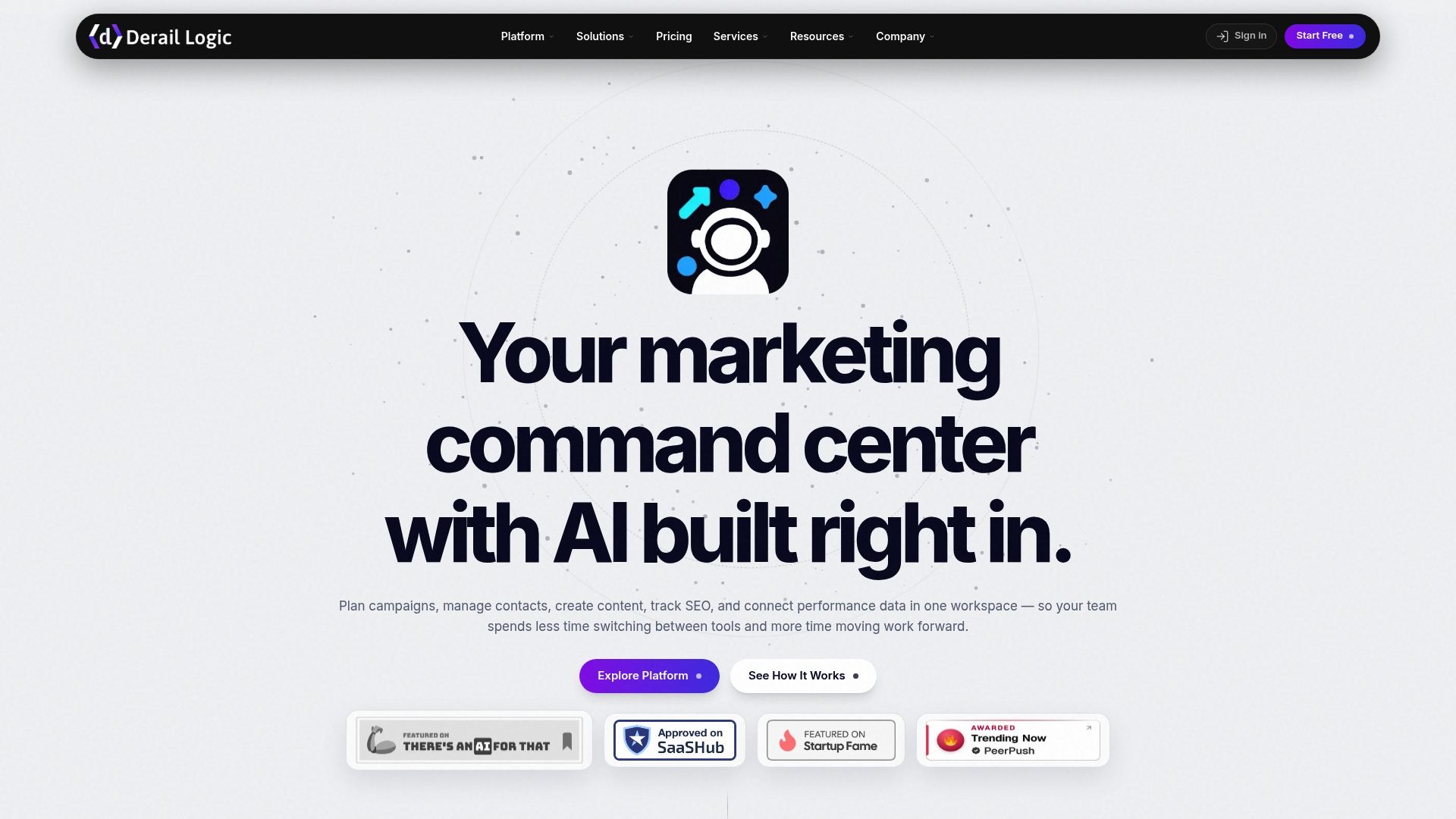
The platform’s analytics and CRM connect the data this checklist asks for into one dashboard, so a remediation task tied to a landing page’s Core Web Vitals score sits next to the actual traffic and conversion numbers for that page instead of living in a separate tool. The project management features let you assign the owner and due date this checklist recommends directly on the finding, rather than pasting it into a spreadsheet no one reopens.
What this marketing platform speeds up specifically:
- Centralized reporting that pulls campaign, traffic, and conversion data into one view instead of four logins.
- Remediation tracking linked to the campaign or page it affects, with an owner and status.
- Integrations with CMS and analytics tools so audit findings connect to the systems already running your site.
Start with the Free plan to see the workflow, or move straight to Core at $69 a month once you’re ready to track remediation across a live site.
Sources
For deeper reference: web.dev’s Core Web Vitals guide covers the official thresholds, Neil Patel’s audit guide walks through a full audit sequence, and Moz’s audit checklist offers a technical-first structure. For an alternative step-by-step reference, see this website audit checklist. Pair these with Search Console and PageSpeed Insights as your daily operational tools.
FAQ
What should be included in an SEO audit?
A complete audit covers technical health (crawlability, indexation, redirects), performance and Core Web Vitals, mobile usability, on-page elements, content quality, backlinks, and structured data. A full audit also includes off-page factors and should run at least annually with lighter quarterly checks between.
How do you do an SEO website audit step by step?
Start with a full site crawl to catch technical blockers, then check Search Console for indexing and Core Web Vitals data, then review on-page elements and content quality, and finish with a backlink review. Prioritize fixes on high-traffic pages with the weakest performance first, since those changes are the most measurable.
What does a technical SEO audit include?
A technical audit checks robots.txt rules, sitemap accuracy, canonical tags, redirect chains, server error codes, and accidental noindex tags. It also includes Core Web Vitals measurement, since LCP, INP, and CLS are technical performance signals tied directly to how search engines evaluate page experience.
Which tools are used for an SEO audit?
The core toolkit includes a site crawler like Screaming Frog or Sitebulb, Google Search Console for indexing and performance data, PageSpeed Insights for speed diagnostics, and a backlink tool like Ahrefs, Semrush, or Moz. Platforms like MartechAI can then centralize the resulting data alongside campaign and traffic reporting for ongoing tracking.
How often should you run an SEO audit?
A full audit once a year is the general baseline, with quarterly mini-audits focused on performance and new content for sites that publish or change frequently, according to Neil Patel’s guidance. A spot check after any major site migration or redesign catches issues before they compound.