



Prioritize a flows-first stack: welcome, abandoned cart, and post-purchase sequences deliver the fastest revenue lift, so audit and fix those three before touching campaign calendars. In mature programs, flows contribute 35 to 45 percent of total email revenue, and the abandoned-cart sequence alone is usually the single highest-earning email you own. If yours is missing or hasn’t been touched in a year, rebuild it this week.
TL;DR:
- Rebuild your abandoned cart flow if it hasn’t been updated in a year, as it often generates the highest revenue among automations.
- Prioritize flows for welcome, abandoned cart, and post-purchase, since they contribute 35 to 45 percent of total email revenue in mature programs.
- Use a three-touch structure for abandoned cart recovery, spacing emails over hours and days, with the final message offering a last call rather than an upfront discount.
- For browse abandonment, trigger the flow after at least 30 seconds on a product page or multiple views, keeping the messaging softer and avoiding aggressive discounts early.
- Regularly track flow-attributed revenue, revenue per recipient, and repeat purchase rate, and perform quarterly audits to maintain and improve automation effectiveness.
Table of Contents
- What Are the Essential Ecommerce Email Automations?
- How Do You Set Up These Email Automations Step by Step?
- What’s the Right Timing and Copy for Each Email?
- How Do You Measure Whether Your Flows Are Actually Working?
- Which Advanced Tactics Actually Move the Needle?
- How a Unified Platform Simplifies Building These Flows
- What Actually Matters When You’re Building This Yourself
- Build These Flows Faster With MartechAI
- Sources
- FAQ
What Are the Essential Ecommerce Email Automations?
An ecommerce email automation program is really a handful of triggered sequences, not a giant campaign calendar. Each flow answers a specific customer moment: someone joins your list, abandons a cart, buys something, or goes quiet. Get these seven right and campaigns become a bonus, not a crutch.
Welcome series
The welcome series introduces your brand to someone who just handed you their email address, and it’s the highest-attention window you’ll ever get with that person. A 3 to 5 email cadence spread across 5 to 7 days works for most catalogs: an immediate “thanks for joining” note, a brand story or values email on day 2, a bestseller or social proof email on day 4, and a soft-offer close by day 7.
Where you place the incentive matters more than the discount itself. Holding the offer until email three or four, after you’ve established what makes the brand worth paying full price for, tends to protect margin without killing conversion.
Abandoned cart recovery
This is the flow most teams get lazy about, and it’s the one with the highest revenue per recipient in most stacks. The timing that consistently performs is a sequence spaced over hours and days, with the discount reserved for that final message rather than offered upfront. Klaviyo’s benchmarking on ecommerce automation confirms this three-touch structure as the standard, and leading with a discount on touch one trains buyers to wait you out on every future purchase.
Email one should simply show the cart contents and remove friction (a direct checkout link, no popup gymnastics). Email two can add urgency or stock scarcity if it’s genuinely true. Email three is where the offer lives, and it should feel like a last call, not a habit.
Browse abandonment
Browse abandonment triggers off product-page views without an add-to-cart event, and it needs a lighter touch than cart recovery. Someone who looked at a product but didn’t add it to their cart hasn’t shown the same intent as someone who filled a cart and left. Fire this flow only after a meaningful dwell time (30+ seconds on a product page, or two-plus views of the same item) to avoid spamming casual browsers.
Keep the creative softer here: no aggressive discount codes in email one, more “still thinking about it?” framing with supporting reviews or a size guide. Two emails over 48 hours is usually enough. Push harder and you’ll train people to ignore the flow entirely.
Post-purchase flow
This is where most ecommerce brands leave the most money on the table, because they stop at the order confirmation. A proper post-purchase sequence runs 4 to 6 emails: order confirmation, shipping notification, a delivery or onboarding email, a review request, a cross-sell, and a replenishment nudge where relevant. Done right, this architecture can lift 90-day repeat purchase rate by 25 to 40 percent.
The review request should land after the product has had time to actually get used, not the day after delivery. A skincare brand asking for a review on day 2 gets a rushed, low-value response. Asking on day 14, after someone has seen a real result, gets a review worth publishing.
Replenishment and subscription prompts
For consumables, coffee, supplements, pet food, skincare, replenishment timing should be calculated from actual purchase cadence data rather than a guess. If your average customer reorders coffee every 34 days, your reminder should land around day 28, giving them a few days of runway before they run out. Fixed 30-day timers ignore product-specific consumption rates and either nag too early or arrive too late.
This flow is also your best subscription conversion opportunity. Frame the subscription option as convenience (“never run out again”) rather than pure discount, and offer it at the point of replenishment rather than at first purchase, when the customer hasn’t yet felt the pain of running out.
Winback and sunset flows
A winback flow targets customers who haven’t purchased in a defined window, typically 60 to 120 days depending on your average repurchase cycle, and a sunset flow removes chronically unengaged contacts from your active sending list. Skipping the sunset step is one of the most common deliverability mistakes in ecommerce email.
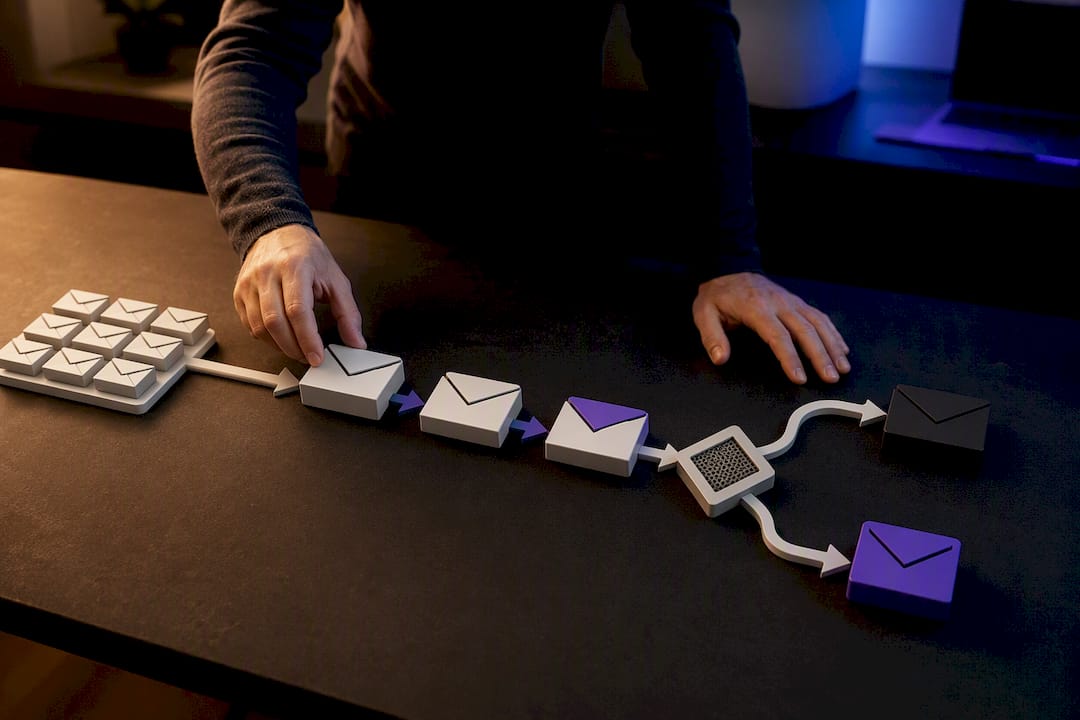
Structure winback as two or three escalating touches: a “we miss you” email, a stronger incentive email, and a final “should we stop emailing you?” message. Anyone who doesn’t engage with that final message should move to a suppressed or quarterly-only list. Continuing to mail unengaged addresses drags down your sender reputation for everyone else on the list.
VIP and loyalty automations
VIP flows trigger off lifetime value thresholds rather than time or behavior, once a customer crosses a high lifetime spend or completes a set number of orders, they enter a different track entirely. Early access to new products, a dedicated support line, or a loyalty tier upgrade email all belong here. This segment is small but disproportionately valuable, and it’s worth building a distinct flow rather than lumping VIPs into your general post-purchase sequence.
Pro Tip: Run a quick flows audit before building anything new. Pull revenue-per-recipient by flow for the last 90 days. If your abandoned cart flow isn’t your top earner, something in the timing, offer, or trigger setup is broken, and fixing that existing flow will outperform building a brand-new one.
How Do You Set Up These Email Automations Step by Step?
Building the flows above requires mapping each one to a real event in your store, not a vague “someone did something” trigger. Here’s the sequence for setting them up correctly.
- Map every flow to a concrete trigger. Welcome fires off a signup form submission. Abandoned cart fires off a cart-abandoned event, usually 60 minutes after the last cart update with no completed order. Post-purchase fires off “order placed,” then chains to a carrier webhook for shipping and delivery status. Browse abandonment fires off a product-page-view event filtered by dwell time.
- Build your five core segments before you build a single flow. New subscribers, active customers (purchased in the last 90 days), lapsed customers (90 to 180 days since last purchase), VIPs (top 10% by lifetime value), and unengaged (no opens or clicks in 90+ days). Pull these from your CRM or ESP so every flow references the same segment definitions instead of duplicating logic five different ways.
- Add conditional splits where behavior actually diverges. A cart abandonment flow should split on purchase completion, anyone who buys mid-sequence exits immediately. A high-AOV branch (carts over $150, for example) can skip the discount touch and instead offer free shipping or a bundled add-on, since discounting a high-intent, high-value cart erodes margin for no real gain. Out-of-stock checks matter too: never recommend a product back to someone if it sold out since their last visit.
- Layer in SMS at exactly one high-leverage moment. The 24-hour cart touch is the strongest candidate, since pairing SMS with the email sequence at that point complements rather than duplicates the message, and SMS read rates run far higher than email opens. Mirroring every email in SMS annoys people and burns your compliant opt-in list fast. Cap total weekly touches (email plus SMS combined) per contact to avoid fatigue-driven unsubscribes.
- Confirm platform-specific triggers before launch. Shopify stores typically use native checkout and order webhooks, which fire cleanly for cart and post-purchase flows. WooCommerce setups need a plugin bridge to fire cart-abandonment events reliably, since WordPress doesn’t track cart state the same way natively. BigCommerce stores should double-check that product-view events are passing through with SKU-level detail, not just category-level, or your browse abandonment flow will send generic, unhelpful recommendations.
Pro Tip: Test every conditional split by placing a real order and then abandoning a second cart within minutes of each other. If both flows fire correctly and the purchase-exit logic removes you from the abandoned-cart sequence, your triggers are wired correctly. Skipping this test is how brands end up emailing a “did you forget something?” message to someone who already checked out.
What’s the Right Timing and Copy for Each Email?
Getting the trigger logic right is only half the job. The timing between emails and what each one actually says determines whether the flow converts or gets ignored.
Every email in every flow should follow the single-CTA rule: one clear action, one button, one link repeated if needed, never three competing offers stacked in the same message. Ecommerce email design benchmarks show single-CTA emails converting better than multi-CTA layouts, and it’s not close. A cluttered email forces the reader to decide what matters; a clean one decides for them.
Subject-line personalization tokens (first name, last-viewed product, cart item) lift open rates modestly on their own, but they work best paired with a genuinely relevant subject rather than a token bolted onto a generic line. “Still thinking about the Classic Tote?” beats “Hi [First Name], check this out!” every time. Social proof, review counts, star ratings, “bestseller” badges, belongs in the middle of the email body, right after the product image and before the CTA, not buried at the bottom where nobody scrolls.
On design: plain-text or narrative-led emails are increasingly outperforming heavily designed, image-stacked templates for many direct-to-consumer brands, particularly in welcome and post-purchase flows where the goal is connection rather than a catalog browse. Save the polished, image-forward templates for abandoned cart and cross-sell emails, where showing the actual product matters. Every email, regardless of style, needs to render cleanly on a phone screen, since most ecommerce email opens now happen on mobile.
Use educational content (how-to guides, ingredient explainers, styling tips) in welcome and post-purchase flows, where the goal is trust-building. Save purely promotional content, discounts, flash sales, bundle offers, for abandoned cart and winback flows, where the goal is a direct conversion push.
How Do You Measure Whether Your Flows Are Actually Working?
Track four numbers religiously: revenue per recipient (RPR) by flow, flow-attributed revenue as a share of total email revenue, repeat purchase rate at 90 days, and click-to-open rate on individual emails within each sequence. RPR tells you which flow is your workhorse. Flow revenue share tells you whether you’re relying too heavily on one-off campaigns, and the target for a mature program is that 35 to 45 percent range flows should be performing strongly.
- Revenue per recipient (RPR): total flow revenue divided by recipients, tracked per flow, not blended across your whole program.
- Flow revenue share: what percentage of total email revenue comes from automated flows versus manual campaigns.
- Repeat purchase rate: the percentage of customers who buy again within 90 days of their first order.
- Click-to-open rate: engagement quality within an email, independent of how many people opened it.
The attribution trap almost every ecommerce team falls into is assuming last-click revenue equals incremental revenue. If someone was going to buy anyway and your abandoned cart email just happened to land first, that’s not new revenue, it’s revenue you’d have gotten regardless. The only reliable way to isolate true incremental lift is a holdout test: withhold a flow from a random 5 to 10 percent of eligible contacts and compare their purchase behavior against the group that received it. The gap between the two groups is your real, incremental impact, not the inflated number your ESP’s attribution model reports by default.
Build a testing roadmap in priority order: subject-line tests first (fastest to run, cheapest to learn from), then offer placement within the cart flow, then send-time optimization, then product recommendation block performance in post-purchase emails. On deliverability, brands treating their list as an asset to actively maintain, running quarterly audits, suppressing unengaged contacts on schedule, and reviewing flows every quarter, sustain meaningfully higher RPR over time than brands that set flows once and forget them.
Which Advanced Tactics Actually Move the Needle?
Predictive send-time optimization and AI-generated subject-line variants are no longer bleeding-edge, they’re table stakes for a well-run program, and they typically deliver 8 to 15 percent lifts in click rates when implemented correctly. The mechanism is straightforward: instead of blasting your whole list at 10 AM Tuesday, the system learns each recipient’s individual engagement pattern and sends when they’re statistically most likely to open.
Dynamic product recommendation blocks, the “you might also like” sections in post-purchase and browse abandonment emails, can lift revenue in those flows by 20 to 35 percent, but only if inventory sync is solid. The single most common failure here is recommending an out-of-stock item, which kills trust fast. Confirm your recommendation engine checks live inventory before rendering, not a cached snapshot from that morning.
Predictive replenishment, calculating each customer’s likely reorder window from their own purchase history rather than a flat 30-day timer, consistently outperforms fixed-timer reminders for consumable products, because it respects the actual variance in how fast different customers use up a product.
- Predictive send-time and subject-line AI: 8 to 15% average click lift when tuned on real engagement data.
- Dynamic recommendation blocks: 20 to 35% revenue lift in post-purchase, contingent on live inventory checks.
- Predictive replenishment: outperforms fixed timers by respecting individual cohort purchase cadence.
- SMS: one critical touchpoint, not a mirror of your email flow.
Pro Tip: Don’t let SMS become a second copy of your email program. Pick the single highest-leverage moment, the 24-hour cart touch is usually it, and leave the rest of the sequence in email. Over-texting a compliant SMS list is one of the fastest ways to burn through your opt-ins.
How a Unified Platform Simplifies Building These Flows
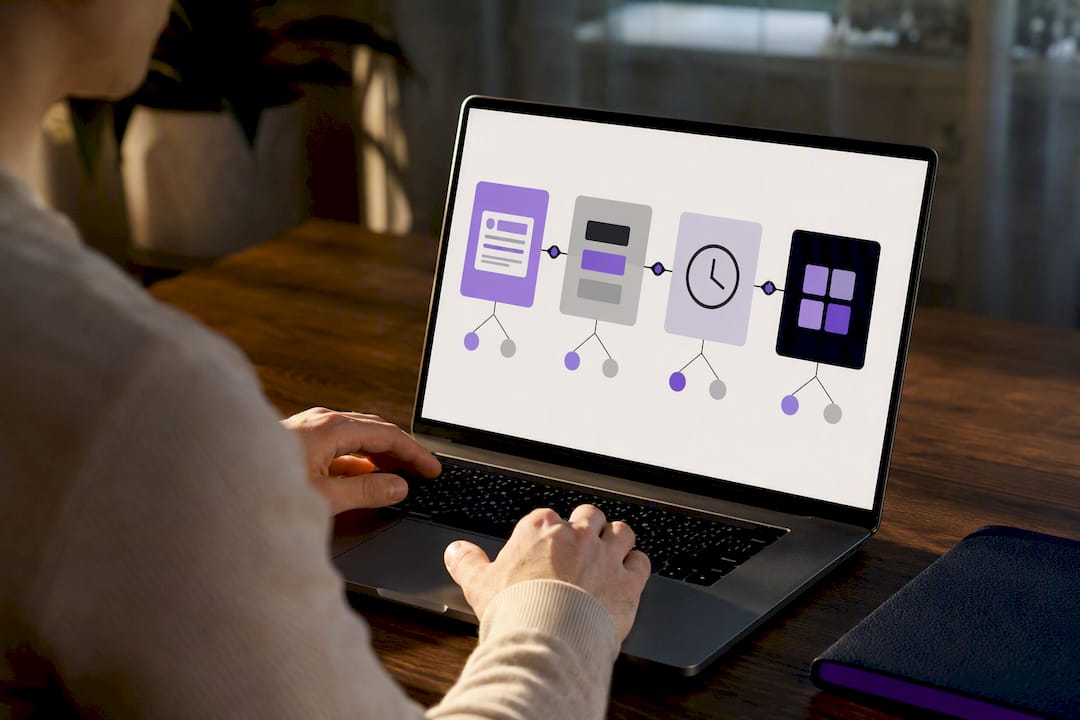
Most of the friction in ecommerce email automation isn’t strategic, it’s operational. Teams know they need a welcome series and a post-purchase flow; the problem is stitching together a form tool, a segmentation spreadsheet, and an ESP that doesn’t talk to the CRM. MartechAI’s campaign studio gives you a visual canvas for building the multi-step flows and conditional splits described above, welcome, abandoned cart, post-purchase, without hand-coding trigger logic across disconnected tools.
The five core segments only work if they mean the same thing everywhere. An intelligent CRM keeps segment definitions (new subscribers, VIPs, lapsed customers) in one place, so your abandoned cart flow and your winback flow are pulling from the same source of truth instead of drifting apart over time.
The AI engine surfaces the optimization work most teams never get to: flagging which send times are actually working for specific segments, generating subject-line variants worth testing, and highlighting churn risk before a customer goes fully unengaged. For measurement, MartechAI’s analytics layer supports the dashboards and conversion tracking needed to run real holdout tests, so RPR and flow revenue share aren’t guesses pulled from a default attribution model.
What Actually Matters When You’re Building This Yourself
If you’re deciding where to spend your next month of work, the priority order is flows first, segmentation second, campaigns third. I’ve seen too many teams pour effort into a clever campaign calendar while their abandoned cart flow sits broken from a checkout redesign six months ago. Fix the foundation before you decorate it.
The three mistakes that show up constantly: discounting too early (training buyers to wait for a deal instead of buying at full price), mailing unengaged contacts long past the point of diminishing returns, and skipping the sunset flow entirely, which quietly damages deliverability for every email you send afterward.
On staffing: a solo founder with a decent ESP and a weekend can build the core five flows. Once you’re running holdout tests, segment-specific creative, and SMS coordination across multiple flows, that’s usually the point where a dedicated email ops hire pays for itself.
— Zachary
Build These Flows Faster With MartechAI
One platform gives ecommerce teams one place to build, launch, and measure every flow in this guide, instead of juggling a form tool, a spreadsheet of segments, and an ESP that doesn’t share data with either. A campaign studio maps directly to the trigger logic covered above, welcome, cart abandonment, post-purchase, so conditional splits and channel coordination happen visually instead of through custom code.
The AI engine pulls from live business data to flag send-time opportunities and churn risk before you’d catch them manually, and the built-in analytics make holdout testing and RPR tracking straightforward rather than a manual export-and-pivot-table exercise. If your abandoned cart flow hasn’t been touched in a while, or you’re still running welcome emails with no post-purchase sequence behind them, start a trial of MartechAI’s marketing automation platform and rebuild your highest-priority flow this week.
Sources
The RPR and flow revenue-share benchmarks referenced throughout this guide come from Online Store News’s 2026 email marketing engine report. Abandoned-cart timing and sequencing guidance draws on Klaviyo’s ecommerce automation benchmarks. Post-purchase flow architecture and LTV impact figures come from Ecommerce Times’s post-purchase flow analysis, and SMS coordination guidance is sourced from Agile Commerce’s lifecycle flow breakdown. For a broader look at how measurement discipline improves marketing ROI, see this analysis of analytics-driven marketing performance.
- How to Build an Email Marketing Engine That Drives Repeat Revenue in 2026 – Online Store News
- How to Build a Post-Purchase Email Flow That Maximizes LTV in 2026 – Ecommerce Times
FAQ
What is the best way to automate ecommerce emails?
Start with the three highest-impact flows, welcome, abandoned cart, and post-purchase, before building anything else. These typically account for the majority of automated email revenue, and getting their timing and triggers right matters more than adding additional flows.
What are the five core segments in ecommerce email marketing?
The five segments that matter most are new subscribers, active customers, lapsed customers, VIPs by lifetime value, and unengaged contacts. Every flow should pull from these same segment definitions rather than creating one-off lists.
How much is a 1,000-person email list worth?
There’s no single reliable dollar figure, since value depends heavily on your average order value, purchase frequency, and how engaged that specific list actually is. A highly engaged list can outearn a stale list of unengaged contacts many times over.
What is the 80/20 rule in email marketing?
Applied to ecommerce, it generally means roughly 80% of your email revenue comes from a small set of high-performing flows, abandoned cart and post-purchase especially, rather than being evenly spread across every campaign and automation you send.
How often should you review and rebuild your email flows?
A quarterly audit is the standard cadence for checking flow revenue-per-recipient, testing new subject lines, and confirming triggers still fire correctly after any storefront changes. Brands that skip this review tend to see flow performance quietly decay over time.