



Marketing project management is the structured process that turns campaign ideas into on-time, measurable launches. Applied well, it reliably ships campaigns on schedule and against agreed KPIs, anchored by three artifacts: a written brief, a shared campaign board, and a launch readiness checklist. Skip any one of them, and timelines slip.
TL;DR:
- Structuring reviews into two fixed rounds reduces delays caused by scattered feedback, which can otherwise extend campaign timelines by several days or weeks.
- A single campaign board with clear ownership and automated calendar syncing prevents silent date drifts that often cause missed deadlines or broken assets.
- Using a detailed brief template with mandatory fields like audience, outcome, channels, assets, and launch date significantly cuts rework and review cycles.
- Applying a phased five-step campaign lifecycle with gatekeeping and specific ownership ensures on-time delivery and minimizes miscommunications across teams.
- Monitoring operational metrics such as cycle time, review rounds, on-time launch rate, and post-launch errors helps diagnose process inefficiencies and improve overall campaign success.
Table of Contents
- Key Takeaways for Busy Marketing Teams
- What Marketing Project Management Actually Means
- Why Structured Project Management Improves Campaign Outcomes
- Who Owns What in a Marketing Campaign
- The Five-Phase Campaign Lifecycle
- How Do You Build a Repeatable Campaign Workflow?
- Choosing Tools That Support the Workflow, Not the Other Way Around
- Which KPIs Actually Show Whether Your Process Works?
- Common Campaign Pitfalls and How to Fix Them
- Ready-to-Use Templates and Checklists
- What I’ve Learned Watching Marketing Teams Adopt Project Discipline
- See How MartechAI Fits Into Your Campaign Workflow
- Sources
- FAQ
Key Takeaways for Busy Marketing Teams
If you only have five minutes before your next campaign kicks off, here’s what to fix first.
- Write the brief before anyone touches a design tool. A brief that names the audience, outcome, channels, asset list, and launch date reduces rework and cuts review cycles before production even starts.
- Batch your reviews. Two structured review rounds beat ten scattered rounds of comments in Slack, email, and a shared doc.
- Run one campaign board, not five. Every asset, task, and approval for a given campaign lives in a single visual workspace that stakeholders can check without asking for a status update.
- Define go/no-go criteria before launch week. Decide now what “ready” looks like, so nobody is negotiating readiness the night before.
As for when a piece of work deserves this level of structure: if it involves more than one team, a hard deadline, and more than three deliverables, treat it as a project rather than a routine task. A single social post doesn’t need a phase plan. A product launch spanning email, paid social, and a landing page does.
Ownership matters as much as process. One person, typically a marketing project manager or a designated campaign owner, should hold the calendar and the go/no-go call. Give reviewers a clear service-level agreement, something like 48 to 72 hours per round, so approvals don’t quietly stall a campaign for a week. Without a named owner and a review clock, even a well-written brief tends to drift.
What Marketing Project Management Actually Means
Marketing project management is the discipline of planning, coordinating, and controlling a campaign from concept to delivery, with defined phases, cross-functional handoffs, and dependencies that must resolve before launch. It differs from general project management in one key respect: marketing work depends heavily on creative iteration, brand approval, and channel-specific production, none of which follow the predictable, repeatable cadence you’d see in a construction schedule or a software sprint. It also differs from day-to-day marketing operations. Operations covers the ongoing, repeatable work: posting to social channels, answering inbound leads, running the always-on ad account. A project has a start date, an end date, a defined outcome, and people outside marketing who are waiting on it, whether that’s sales, product, or an executive sponsor.
Engineering teams often run two-week sprints with a fixed backlog and a retrospective at the end. Marketing campaigns rarely fit that rhythm cleanly, because a launch date is often fixed by an external event (a product release, a holiday, a trade show) rather than by how much work fits in a sprint. That means marketing project management borrows Agile’s habit of visible task boards and short feedback loops, but keeps a Waterfall-style fixed deadline underneath it. Trying to force marketing into pure two-week sprints usually just relabels the same chaos with new terminology.
The practical guidance: apply a project framework when a campaign crosses two or more teams, has a launch date that can’t move, or requires more than a handful of distinct assets. Everyday content requests, routine social scheduling, and single-channel updates don’t need this level of structure. Applying it to everything creates process fatigue and slows down the small stuff that should move fast.

Why Structured Project Management Improves Campaign Outcomes
Speed to market, fewer reworks, and tighter cross-team alignment are the three outcomes structure buys you. Organizations that adopt structured project management practices for their marketing initiatives report higher success rates in meeting project objectives, according to the Project Management Institute. That’s not a surprising finding on its face, but it’s worth taking seriously given how many marketing teams treat process as optional overhead rather than a launch requirement.
The cost of skipping structure shows up in predictable ways: a campaign that should take three weeks stretches to six because feedback trickled in over email instead of arriving in one batched round. A landing page goes live with the wrong offer because nobody owned the final check. A paid campaign launches a day late because creative assets were still sitting in someone’s downloads folder instead of the shared drive the media buyer expected.
There’s a real concern worth addressing directly here: does more process kill creativity? The evidence points the other way. Structure removes ambiguity about deadlines and ownership, which frees creative contributors to spend their energy on the actual work rather than chasing down who’s supposed to approve what. A tight brief doesn’t restrict a copywriter’s voice. It removes the guesswork about who the audience is and what success looks like, so the writing can focus on getting there.
The teams that resist structure most loudly are often the ones drowning in it already, just informally, through endless Slack threads and untracked email chains. A campaign board and a brief template don’t add bureaucracy. They replace an invisible, chaotic version of the same process with a visible one people can actually manage.
Who Owns What in a Marketing Campaign
Ambiguity about ownership is one of the fastest ways to stall a campaign. Marketing and project management roles carry distinct duties, and understanding typical responsibilities in advertising and marketing management as tracked by the U.S. Bureau of Labor Statistics helps clarify where a project manager’s job ends and a campaign owner’s begins.
Here’s a practical role map for a cross-functional campaign team:
- Marketing project manager: owns the timeline, the campaign board, and the intake process; doesn’t necessarily approve creative, but flags when a delay puts the launch date at risk.
- Campaign owner: owns the strategy and the final go/no-go decision; usually a brand manager, product marketer, or channel lead depending on the campaign.
- Contributors: copywriters, designers, developers, and paid media specialists who produce the actual deliverables against the brief.
- Approvers: legal, brand, or executive stakeholders whose sign-off is required before assets go live.
- Backup owner: a named substitute for the campaign owner and for at least one key approver, so a single vacation doesn’t freeze the whole launch.
Set service-level agreements for reviews up front, and put them in writing where the team can see them. A common working standard is 48 to 72 hours per review round, with a clear escalation path if an approver misses that window twice. Escalation shouldn’t mean an angry email. It should mean the marketing project manager has standing permission to pull in the backup approver automatically once the clock runs out.
Professional development matters here too. Many marketing project managers pursue formal credentials like the PMP certification or a Scrum certification to formalize skills they’ve often built informally on the job. That credential doesn’t replace judgment about how marketing work actually flows, but it does give a shared vocabulary for phases, dependencies, and risk that’s useful when working alongside product or engineering teams who already speak that language.
The Five-Phase Campaign Lifecycle
A campaign moves through five phases: planning, organization, execution, control, and delivery. Each phase has its own checklist, its own owner, and its own artifact that proves the phase is actually done, not just in progress.
- Planning. The campaign owner defines the objective, audience, and success metrics. Deliverable: an approved brief with a fixed launch date. The Breeze framework for marketing project management treats every launch as a project with fixed dates, dependencies, and defined no-go criteria, which is worth adopting wholesale rather than reinventing.
- Organization. The marketing project manager builds the campaign board, assigns tasks, and maps dependencies (design can’t start until copy is approved, for instance). Deliverable: a populated campaign board with owners and due dates on every task.
- Execution. Contributors produce the assets: copy, creative, landing pages, email templates, paid media creative. Deliverable: a complete asset list matched against the brief’s requirements.
- Control. Approvers review work in batched rounds against a fixed review window. Deliverable: signed-off assets and a QA checklist confirming links, tracking, and compliance details are correct.
- Delivery. The campaign goes live, and the team confirms every channel fired as planned. Deliverable: a go/no-go decision, logged by the designated decision owner, followed by a launch confirmation.
Pro Tip: Assign one person, and only one person, as the go/no-go decision owner before planning even starts. Committees don’t make launch decisions well under time pressure. Someone needs the authority to say yes or delay, full stop.
Timelines look different depending on scale. A small campaign, such as a single email promotion tied to a seasonal sale, might run this entire lifecycle in about a week, with a couple of days for planning and brief approval, a day to organize the board, several days of execution, a day of control, and same-day delivery. A large product launch spanning paid social, a landing page, email nurture, and a PR push often needs six to eight weeks: roughly one week for planning, one week to organize dependencies across teams, three weeks of execution running in parallel across channels, one week of control with two review rounds, and a dedicated launch week for delivery and monitoring.

The phase names matter less than the discipline of treating each one as a gate rather than a suggestion. Teams that skip straight from planning to execution, without a real organization phase where dependencies get mapped, are the ones who discover on launch day that the landing page was never connected to the tracking pixel the paid media team needed.
How Do You Build a Repeatable Campaign Workflow?
Four control points decide whether a campaign moves smoothly or stalls: intake, approval routing, production handoff, and launch readiness. Gradial’s research on campaign workflow orchestration identifies these as the moments where campaigns most often get stuck, and each one needs its own explicit rule rather than an ad-hoc judgment call.
Intake should require, at minimum: campaign objective, target audience, requested channels, hard deadline, and requester’s name. Skipping any of these fields is how a “quick request” from a sales team turns into a three-week fire drill, because nobody asked what “quick” actually meant.
The brief itself needs five non-negotiable fields: audience, outcome, channels, asset list, and launch date. This isn’t arbitrary. Research on marketing project management practices found that briefs missing any of these fields cause dramatically more rework and review cycles than briefs that include all five up front. A brief without a named audience produces copy that tries to speak to everyone and lands with no one.
Approval routing should follow a fixed sequence: brand check, legal or compliance check (if applicable), then final sign-off from the campaign owner. Route these in parallel where possible rather than forcing legal to wait for brand, which just doubles your review window for no reason.
Handoffs between planning and production are where campaigns quietly die. The fix is boring but effective: connect the content calendar directly to the production board so a date change in one automatically flags the other. A connected calendar prevents the common failure where a launch date moves in a planning doc but nobody tells the design team.
| Workflow Element | Rule | Why It Matters |
|---|---|---|
| Intake | Requires objective, audience, channels, deadline, requester | Filters vague requests before they consume a sprint |
| Brief | Requires audience, outcome, channels, assets, launch date | Cuts rework and review cycles |
| Approval routing | Fixed sequence: brand, legal, final sign-off | Prevents circular or duplicated reviews |
| Handoff | Calendar synced to production board | Stops silent date drift between teams |
| Launch readiness | Checklist confirmed by named owner | Catches broken links, tracking, and compliance gaps before go-live |
Launch readiness deserves its own checklist, confirmed by a named owner rather than assumed complete: tracking pixels installed and tested, links verified across every asset, compliance language present where required, and a rollback plan if something breaks in the first hour. Skipping this step is how teams discover a broken UTM parameter three days into a paid campaign, after the budget’s already spent.
Choosing Tools That Support the Workflow, Not the Other Way Around
The workflow comes first; the tool comes second. As the team behind Toffu.ai’s guide to marketing workflows puts it, the workflow is the system, and tools exist to support it rather than the reverse. Buying a project management platform before you’ve agreed on your brief fields, review windows, and approval sequence just gives your chaos a nicer interface.
That said, five tool categories show up in nearly every functioning marketing operation: a campaign studio for planning and visualizing the calendar, a project or task board for day-to-day execution, a digital asset manager (DAM) for storing approved creative, a CMS for publishing content, and an analytics dashboard for measuring results.
Integration priority matters more than feature count. Connect your campaign planning tool to your task board first, since that’s where the most handoffs happen daily. Connect your CMS second, so approved content publishes without a manual export step. CRM and analytics integrations come third, useful for closing the loop on campaign performance but rarely the bottleneck in day-to-day execution.
Three configuration rules keep tools from becoming their own source of chaos: run one campaign board per campaign rather than scattering tasks across five tools, attach final assets directly to the task where they’ll be used rather than linking to a separate drive, and connect your calendar to your production board so a date change propagates automatically. Teams that follow these three rules tend to spend far less time in status meetings, simply because the status is already visible.
Which KPIs Actually Show Whether Your Process Works?
Cycle time, review loop count, on-time delivery rate, and post-launch error rate are the four operational metrics worth tracking weekly. These aren’t vanity numbers. They tell you whether your process is actually working before a campaign’s marketing results even come in.
Cycle time measures days from brief approval to launch. Track it per campaign type (email vs. paid launch vs. multi-channel), since comparing a single email to a six-week product launch tells you nothing useful.
Review loop count measures how many rounds of feedback a single asset goes through before approval. More than two or three rounds on a routine asset usually signals a brief that wasn’t specific enough at the start.
On-time delivery rate is the percentage of campaigns that launched on their original scheduled date, calculated as campaigns launched on time divided by total campaigns launched, over a given quarter.
Post-launch error rate tracks issues discovered after go-live, like broken links or missing tracking, that a proper readiness checklist should have caught.
Structured marketing workflows that centralize tasks, approvals, and assets into a repeatable system reduce delays and improve accountability, based on findings from Canva’s research on marketing workflow practices.
Correlate these operational numbers against campaign outcomes over time. If cycle time is shrinking but conversion rates are flat, your process is working but your creative or targeting needs attention instead. If review loops are climbing, your brief template needs revisiting before you blame the team. Review this dashboard weekly during active campaign periods and monthly otherwise, comparing results against your own performance benchmarks rather than an industry average that may not reflect your channel mix.
Common Campaign Pitfalls and How to Fix Them
Four failure patterns account for most campaign slippage: vague briefs, scattered feedback, weak handoffs, and a content calendar disconnected from production. Research into marketing project management practices confirms these are the primary, recurring causes of delayed launches across teams of every size.
- Vague brief: fix it by making the five core fields (audience, outcome, channels, assets, launch date) mandatory before any task gets assigned.
- Scattered feedback: fix it by batching review rounds into two fixed windows instead of accepting comments as they trickle in over a week.
- Weak handoffs: fix it by requiring a named receiving owner for every handoff, not just a task marked “done.”
- Disconnected calendar: fix it by syncing your content calendar directly to your production board so a date change updates both automatically.
Pro Tip: Don’t try to fix all four at once. Pilot one workflow change, like batched reviews, on your next campaign, measure whether cycle time improves, then turn it into a template before rolling it out team-wide.
If a problem persists after you’ve fixed the process, the tool probably isn’t the issue. Swapping platforms rarely solves a habit problem; it just gives the same bad habit a new home.
Ready-to-Use Templates and Checklists
Copy these directly into your next campaign kickoff.
Brief template fields:
- Campaign objective and target audience
- Desired outcome and success metric
- Channels involved
- Full asset list with owners
- Launch date and any hard dependencies
Launch readiness checklist:
- Tracking and analytics confirmed live on every asset
- All links tested across devices
- Compliance and legal language present where required
- Go/no-go decision logged by the named owner
- Rollback plan documented in case of a post-launch issue
Review-window rule: cap feedback at two structured rounds. Round one covers substantive changes; round two covers only final corrections. Anything beyond two rounds usually means the brief needs revisiting, not another round of comments.
What I’ve Learned Watching Marketing Teams Adopt Project Discipline
The biggest misconception about marketing project management is that it’s a constraint on creative work. It’s the opposite. The teams that struggle most aren’t the ones with too much process. They’re the ones with invisible process: unwritten rules about who approves what, unofficial deadlines nobody committed to, feedback that arrives in six different places.
What tends to work is starting small. Pick one workflow, usually the brief and its review window, and fix that before touching anything else. Teams that try to overhaul intake, approvals, and tooling simultaneously usually abandon the effort within a month because it’s too much change at once. The teams that stick with it pilot one fix, measure whether cycle time actually improved, then template it.
The other underrated lesson: a campaign board only works if it’s the single place people check for status. The moment someone starts a parallel spreadsheet “just to keep track,” the board has failed, and it’s worth asking why before adding more features to fix it.
— Zachary
See How MartechAI Fits Into Your Campaign Workflow
If you’ve read this far, you already know the workflows above only work when your tools reinforce them instead of fighting them. MartechAI is built around exactly that idea: campaign planning, a visual campaign studio, an intelligent CRM, and analytics living in one connected workspace instead of five disconnected tabs.
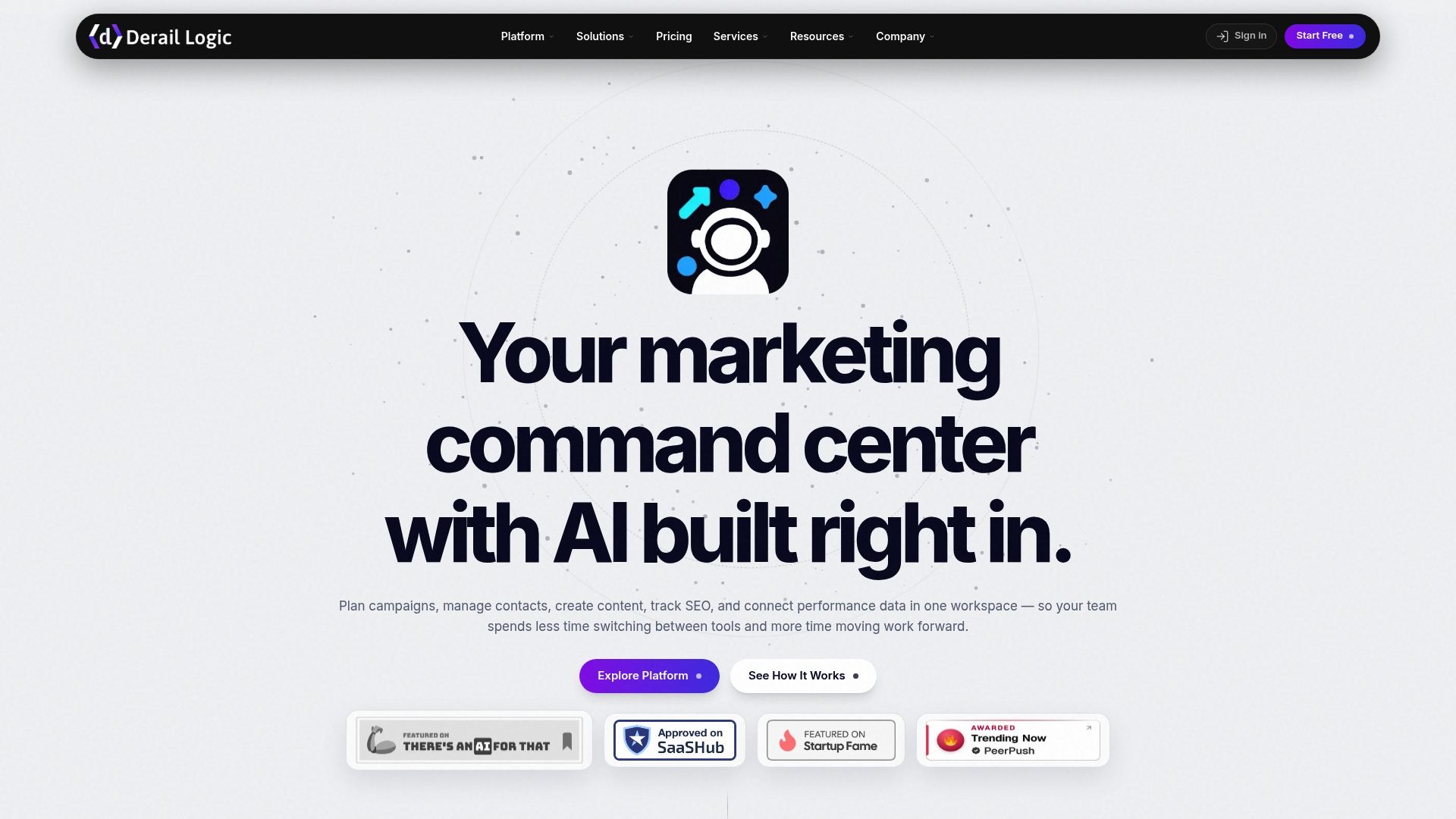
Specifically, MartechAI’s project and task boards link directly to campaign records, so a brief, its asset list, and its launch checklist all live in the same place your team already checks for status. The broader feature set covers CMS integration, email builds with automated compatibility fixes, and AI-driven insights pulled from your own live business data, rather than generic industry benchmarks.
Before you commit to any platform, run this quick check: does it centralize approvals in one routing path? Does it connect your calendar to production automatically? Does it template your brief so intake stops being a guessing game? Some platforms are built to answer yes on all three.
Plans run from a Free tier through Core at $69 per month, Growth at $129 per month, and Agency at $299 per month, with full details on the pricing page. Start a trial and connect your first campaign board this week.
Sources
- Marketing project management: practical guide – Breeze
- Marketing workflows: How to streamline campaigns and approvals – Canva
- Advertising, promotions, and marketing managers — U.S. Bureau of Labor Statistics
FAQ
What Is Project Management for Marketing?
It’s the structured process of planning, organizing, executing, and delivering a marketing campaign using defined phases, owners, and deadlines rather than ad-hoc coordination. Organizations that apply structured practices report higher success rates in meeting their campaign objectives, according to PMI.
What Is Marketing Management for a Project?
This usually refers to the same discipline from the other direction: applying marketing strategy and campaign goals within a project framework, so creative decisions and business objectives move on the same timeline. The campaign owner typically drives this piece, while a marketing project manager keeps the schedule and dependencies on track.
What Are the 5 C’s of Project Management?
Definitions of the “5 C’s” vary by source and aren’t a universal industry standard, so treat any specific list with some caution. Rather than chase a fixed acronym, focus on the fundamentals that actually determine whether a marketing project succeeds: a clear brief, a named owner, defined review windows, mapped dependencies, and a documented go/no-go decision.
What Are the 4 Types of Project Management Methodologies?
The four most commonly referenced approaches are Waterfall (sequential phases with fixed gates), Agile (iterative sprints with flexible scope), Scrum (a structured Agile framework with defined roles and ceremonies), and Kanban (continuous flow visualized on a board). Most marketing teams run a hybrid: Kanban-style boards for visibility, combined with Waterfall’s fixed launch dates, since campaigns rarely have the flexible scope that pure Agile sprints assume.
How Much Does MartechAI Cost?
MartechAI offers a Free plan, plus paid tiers at $69 per month (Core), $129 per month (Growth), and $299 per month (Agency), each with different feature and seat limits. Full current pricing, including add-ons like extra workspaces, is listed on the MartechAI pricing page.