



A marketing calendar is a structured, dynamic system that coordinates strategic priorities with tactical execution across every channel your team manages. When built correctly, it gives marketing teams alignment, predictability, and the flexibility to respond to real opportunities without losing momentum on core campaigns. The SOSTAC planning framework and industry benchmarks both confirm that teams with documented, layered calendars outperform those running on ad hoc schedules. The following marketing calendar best practices will help you build a system that actually gets used, not just created and forgotten.
1. What are the essential planning horizons in a marketing calendar?
The biggest structural mistake in annual marketing schedule design is mixing timelines. Distinct planning horizons prevent administrative fatigue and keep campaigns coherent. When you drop a quarterly goal and a Tuesday post idea into the same view, both suffer.
A well-built calendar operates on four levels:
- Annual layer: Set your overarching themes, immovable dates (product launches, fiscal quarters, major industry events), and revenue goals. This layer rarely changes.
- Quarterly layer: Assign campaign priorities and budget focus areas. Quarterly reviews let you course-correct without rebuilding the whole plan.
- Monthly layer: Define content themes that tie individual pieces together. A monthly theme gives your audience a coherent story instead of random posts.
- Weekly layer: Execute, publish, and review. This is where the calendar becomes a living tool rather than a static document.
Each layer informs the one below it. Annual themes shape quarterly priorities. Quarterly priorities shape monthly themes. Monthly themes shape weekly tasks. Breaking that chain at any level creates disconnected campaigns that feel random to your audience.
Pro Tip: Use separate tabs or views for each planning horizon. Mixing them in one grid is the fastest way to create a calendar no one wants to open.

2. How to design your marketing calendar for clarity and sustainable workflow
A calendar that nobody uses is worse than no calendar at all. Over-engineering leads to abandonment, and the most common form of over-engineering is adding columns for every possible data point.
The minimum viable marketing calendar needs exactly four columns:
- Date: When the content publishes or the campaign launches.
- Channel: Where it goes (email, Instagram, blog, paid search).
- Topic or asset: What the content covers or links to.
- Status: Where it sits in your workflow right now.
That last column deserves more attention than most teams give it. Vague status labels like “in progress” stall visibility and create confusion during handoffs. Replace them with granular, workflow-matched stages: briefed, drafting, review, approved, scheduled, live. Each stage maps to a real action, which means anyone on the team can see exactly what needs to happen next.
Backlog management matters here too. Keep a separate backlog section for ideas that are not yet assigned to a date. This prevents the calendar from filling up with half-formed concepts that block real work.
Pro Tip: Align your status fields directly with your approval process. If your workflow has a legal review step, add “legal review” as a status. The calendar should mirror how your team actually works, not how you wish it worked.
3. What scheduling frequency and review cycles optimize performance?
Frequency is one of the most debated topics in content marketing timeline planning, and the evidence is clearer than most teams expect. Publishing 2 posts per week produces better long-term results than publishing 5 posts per week. Consistency beats volume every time, and a pace your team can sustain without burning out is always the right pace.
Review cycles are equally important and equally ignored. The cadence depends on the content type:
- Social content: Review performance 7–14 days after publishing. Social signals move fast, and waiting longer means missing the window to adjust your next post based on what worked.
- SEO content: Review every 30–90 days. Search rankings shift slowly, and premature changes based on two weeks of data produce worse outcomes than patient, data-informed updates.
- Email campaigns: Review open rates and click rates within 48–72 hours of send. Subject line and send-time patterns emerge quickly.
- Paid campaigns: Review weekly during active spend periods. Budget decisions need faster feedback loops than organic content.
The weekly 15-minute calendar meeting is the highest-leverage habit you can build. A mandatory weekly rhythm meeting keeps the calendar actionable and prevents the drift that turns a living plan into a stale document. Fifteen minutes is enough to confirm what publishes this week, flag anything blocked, and assign one person to resolve each blocker.
Monthly reviews assess whether your themes are landing. Quarterly reviews ask the harder question: are we focused on the right campaigns at all?
4. How to draft your annual calendar before the year starts
Timing the annual planning process is a practice most teams get wrong by starting too late. Draft your annual calendar 8–10 weeks before your fiscal year begins, with final approval locked by december. That timeline gives you a fully approved plan before january execution begins, rather than spending Q1 in planning mode while competitors are already in market.
The annual layer should include:
- Key seasonal dates relevant to your industry (retail peaks, B2B conference seasons, tax periods)
- Product launch windows and campaign flight dates
- Budget allocation by quarter
- Team capacity constraints (vacations, hiring plans, agency contracts)
Annual calendars aligned to seasonal trends form the backbone of strategic marketing. Reactive campaigns that fill gaps left by poor annual planning consistently waste budget. The goal is to make reactive spending a deliberate choice, not a default.
5. How can marketing teams build flexibility into their calendars?
Flexibility is not the opposite of planning. It is a planned feature. Reserving 15–20% of your budget and calendar space for opportunistic campaigns gives your team room to respond to breaking trends, competitor moves, or unexpected media moments without pulling resources from committed campaigns.
The teams that struggle most with reactive marketing are the ones who filled every slot in their calendar with planned content. When a real opportunity appears, they have no room to act, so they either skip it or disrupt three other campaigns to make space.
A living calendar updated weekly is the difference between a team that reacts with purpose and a team that reacts with panic. Build the buffer in before the year starts, not after the crisis hits.
Practical ways to build flexibility into your calendar:
- Mark 2–3 “flex slots” per month as unassigned at the start of the quarter.
- Set a clear approval threshold for opportunistic content (who can greenlight a reactive post without a full brief?).
- Create a one-page brief template for fast-turnaround campaigns so speed does not mean skipping process entirely.
- Review flex slot usage monthly to see whether your team is using them well or leaving them empty.
Accountability matters as much as structure. Assign one person to own the calendar each week. That person confirms updates, flags gaps, and runs the rhythm meeting. Rotating this role across team members builds shared ownership and prevents the calendar from becoming one person’s burden.
6. How to use content batching to reduce weekly calendar pressure
Batching content production monthly is one of the least discussed but most effective content marketing strategies for sustaining output without burning out your team. When you produce a month’s worth of social posts, emails, or blog drafts in a single focused session, the weekly scheduling task becomes a light check rather than a creative sprint.
The mechanics are straightforward. Set aside one or two days per month for content production. Use your monthly theme as the brief. Produce all assets for that theme in one session, then load them into your scheduling tool. The weekly calendar meeting then shifts from “what are we writing this week?” to “is everything queued and on track?”
Batching also improves content quality. Writers and designers produce better work when they are not context-switching between creation and distribution tasks every day. A single focused production session with a clear brief outperforms five scattered days of reactive writing.
Pro Tip: Pair batching with a content calendar plan that maps each asset to a specific channel and date before the session starts. Walking into a production day without a clear asset list is the fastest way to produce content that does not fit anywhere.
7. What role does cross-team communication play in calendar success?
A marketing calendar fails when it lives only in the marketing department. Sales, product, customer success, and leadership all generate inputs that affect campaign timing, messaging, and priorities. A calendar that does not account for a product launch or a sales push creates misaligned campaigns that confuse customers and waste spend.
Build a simple input process. Once per quarter, ask each department for their key dates and priorities. Add those dates to the annual layer before finalizing the quarterly plan. This takes less than two hours and prevents the kind of last-minute scrambles that derail otherwise well-planned campaigns.
Communication also means making the calendar visible. A shared, read-only view for non-marketing stakeholders reduces the volume of “what are you working on?” questions and builds confidence in the marketing team’s planning discipline. Visibility is not just a courtesy. It is a way to protect your team’s time and focus.
Key takeaways
A marketing calendar works best when it combines layered planning horizons, a minimal but precise structure, and a consistent weekly review ritual that keeps the plan alive and adaptable.
| Point | Details |
|---|---|
| Use four planning horizons | Separate annual, quarterly, monthly, and weekly layers to prevent fatigue and keep campaigns coherent. |
| Keep the calendar simple | Four core columns (date, channel, topic, status) prevent over-engineering and increase team adoption. |
| Review on the right cadence | Social content at 7–14 days, SEO content at 30–90 days, and a weekly 15-minute rhythm meeting. |
| Build in flexibility | Reserve 15–20% of budget and calendar slots for opportunistic campaigns before the year starts. |
| Batch content monthly | Producing a month’s assets in one session makes weekly scheduling fast and reduces creative burnout. |
Why simplicity is the hardest discipline in calendar management
I have watched marketing teams build beautiful, color-coded calendars with 14 columns, conditional formatting, and automated dashboards. Six weeks later, no one updates them. The calendar becomes a monument to good intentions rather than a working tool.
The teams I have seen sustain effective calendars over years share one trait: they resist the urge to add complexity when things go wrong. When a campaign slips, the instinct is to add a new approval column or a new status stage. The real fix is almost always a conversation, not a new field.
The weekly rhythm meeting is the single habit I would protect above everything else. Fifteen minutes, same time every week, same agenda. Confirm what publishes. Flag what is blocked. Assign one person to each blocker. That ritual does more for calendar health than any tool or template.
The other mistake I see constantly is skipping the annual planning window. Teams that start planning in january for january are already behind. The 8–10 week drafting window before your fiscal year is not a luxury. It is the difference between a team that executes with confidence and a team that spends Q1 catching up.
Proactive calendar management does not just reduce stress. It compounds over time. Teams that plan well in Q1 have better data for Q2. Better Q2 data produces sharper Q3 campaigns. The discipline pays forward in ways that reactive teams never experience.
— Zachary
How Derail Logic supports your marketing calendar workflow
Marketing calendar management gets harder as your team and channel mix grow. Keeping campaigns, tasks, approvals, and analytics connected across tools creates invisible waste that slows execution.
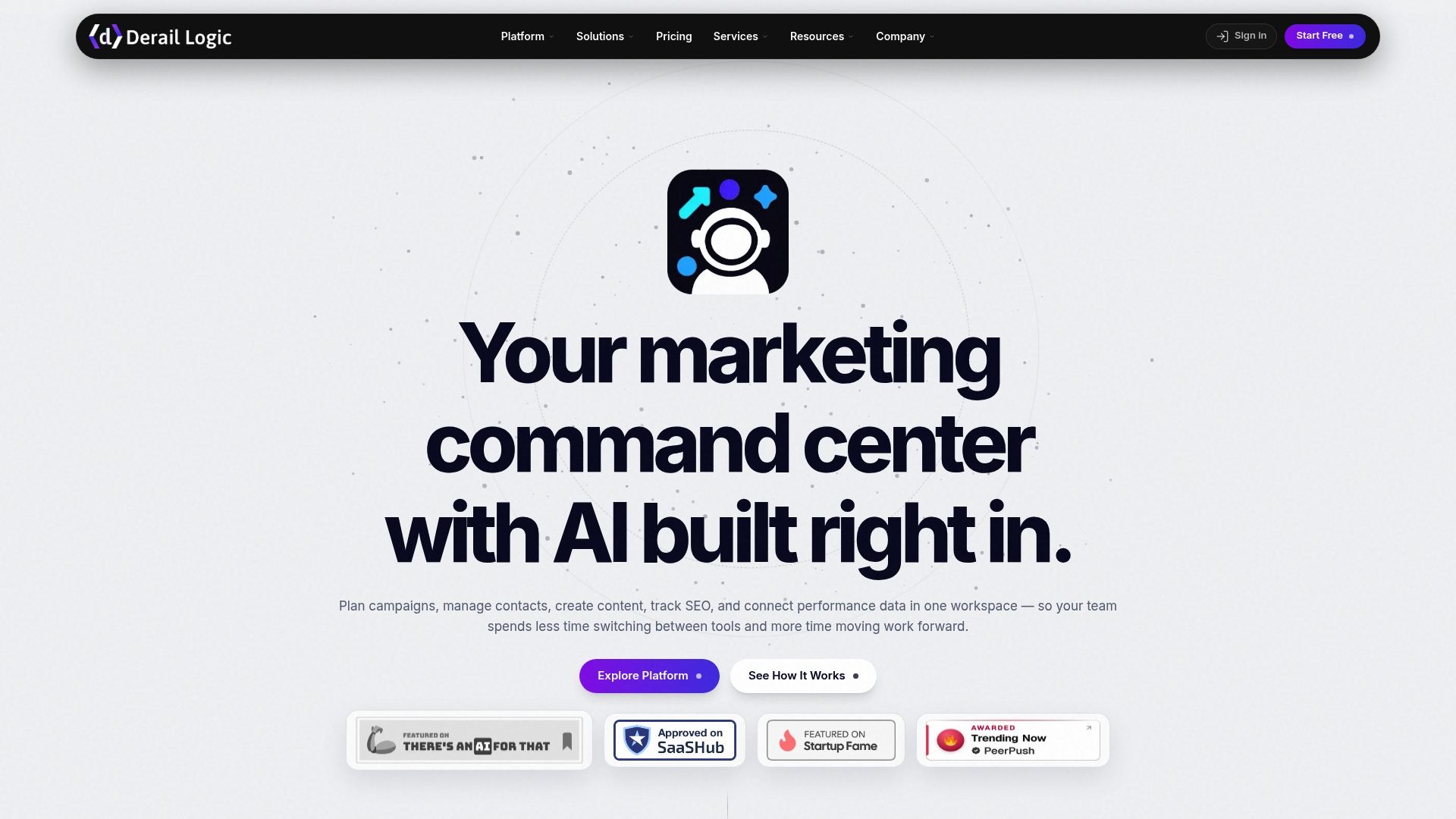
Derail Logic’s Campaign Studio gives marketing teams a visual workspace where campaigns, content, and timelines connect in one place. The project management tools map directly to the workflow stages your team already uses, so status tracking stays accurate without extra admin. Derail Logic’s marketing automation handles scheduling and distribution, freeing your team to focus on strategy and creative work rather than manual calendar upkeep. If you want a platform that connects your calendar to your CRM, analytics, and content tools, Derail Logic is built for exactly that.
FAQ
What is a marketing calendar?
A marketing calendar is a planning and execution tool that maps campaigns, content, and key dates across all channels in a single shared view. It coordinates strategic priorities with day-to-day tasks to keep marketing teams aligned and on schedule.
How far in advance should you plan a marketing calendar?
Draft your annual calendar 8–10 weeks before your fiscal year starts, with final approval by december. This timeline prevents execution delays in january and ensures Q1 campaigns launch on schedule.
How often should you review your marketing calendar?
Review social content performance every 7–14 days and SEO content every 30–90 days. Hold a 15-minute weekly meeting to confirm upcoming tasks, resolve blockers, and keep the calendar current.
How many columns does a marketing calendar need?
A minimum viable calendar needs four columns: date, channel, topic or asset, and status. Adding more columns than your team actively uses leads to abandonment.
How do you keep a marketing calendar flexible?
Reserve 15–20% of your budget and calendar slots for opportunistic campaigns before the year starts. Designate flex slots per month and set a clear approval process for fast-turnaround content so your team can act quickly without disrupting planned campaigns.