



Automation is redefining the role of marketing staff by taking over up to 75% of routine marketing tasks, compressing junior and execution roles while pushing teams toward strategy, governance, and creative judgment. Marketing specialists now rank among the top ten jobs most at risk from AI, according to Anthropic research. The shift is not theoretical. Teams are already shrinking at the bottom and restructuring at the top. Understanding what automation handles, what it cannot, and how to lead through the transition is the most pressing operational question for marketing leaders in 2026.
What marketing tasks are most at risk from automation?
AI currently automates the highest volume of work in content production and campaign execution. Content and copywriting carry the greatest exposure, with 60% of those tasks identified as automatable. Creative design follows at 37%, and junior operations roles face similar pressure. These are not edge cases. They represent the daily output of most marketing departments.
AI now handles end-to-end workflows that previously required multiple team members. A single automated system can sync audience data from a CRM, build segmented lists, launch email sequences, run A/B tests, and monitor performance without human input at each step. Ad optimization on platforms like Google Ads and Meta runs continuously through machine learning, adjusting bids and creative rotation in real time.

The tasks that remain human are those requiring judgment, context, and relationship intelligence. Brand positioning, stakeholder communication, creative direction, and campaign strategy all depend on understanding that AI cannot replicate. The execution vs. judgment balance determines which roles face the most risk.
Here is where automation currently concentrates its impact:
- Email marketing: AI writes, segments, schedules, and optimizes send times without manual input.
- Paid media: Automated bidding and creative testing replace junior media buyers for routine campaign management.
- SEO content: AI drafts, formats, and publishes blog content at scale, reducing the need for entry-level writers.
- Reporting and analytics: Dashboards pull data automatically, replacing manual reporting tasks that once consumed hours each week.
- Social scheduling: Content calendars populate and publish automatically based on audience behavior data.
Pro Tip: Audit your team’s weekly tasks and tag each one as “execution” or “judgment.” Any task tagged execution is a candidate for automation within 12 months.
How is automation changing marketing job roles?
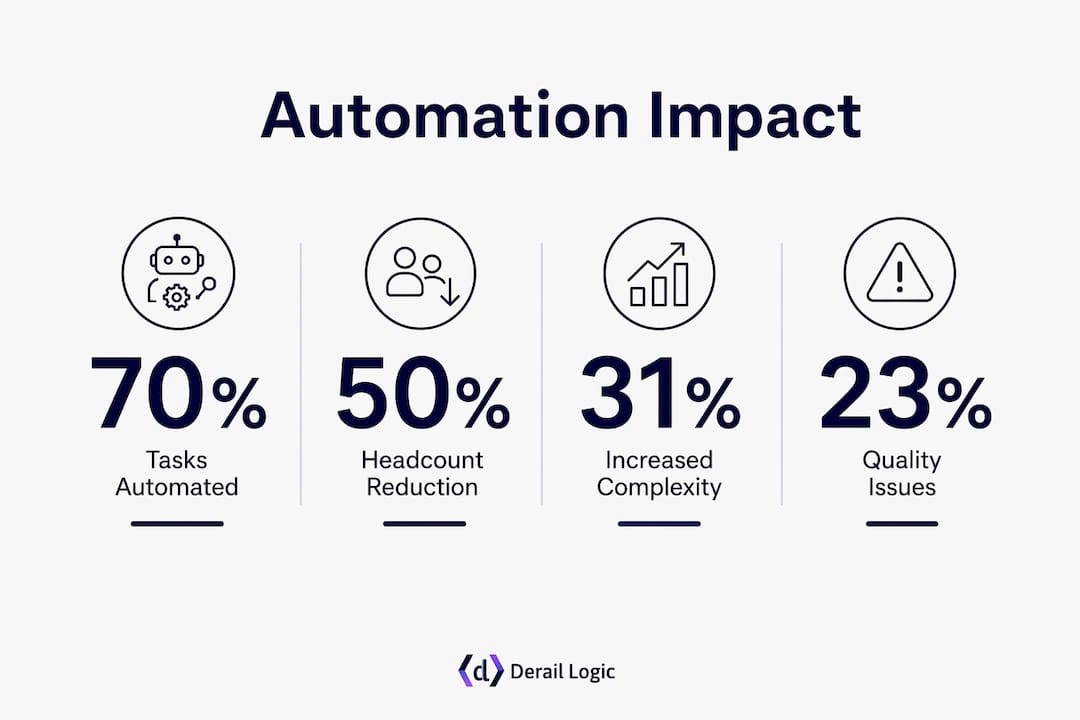
The most visible workforce change is quiet attrition. 50% of B2B SaaS companies reduced marketing headcount through attrition rather than layoffs, with AI directly eliminating fewer than 5% of roles in the past year. Teams are not being cut dramatically. They are simply not being refilled when people leave.
This compression at the junior level creates a structural problem. Entry-level roles have historically served as the training ground for future marketing leaders. When those roles disappear, the pipeline for senior talent narrows. The industry calls this “compression from below,” and it carries long-term consequences that go beyond immediate cost savings.
The roles now growing in demand share a common profile: AI fluency combined with strategic judgment. Marketing teams need people who can govern AI systems, evaluate output quality, set creative direction, and make decisions that require business context. These are not the roles that existed five years ago. They are hybrid positions that blend technical literacy with marketing expertise.
New role types emerging in marketing departments include:
- AI content strategist: Sets prompts, reviews AI output, and maintains brand voice across automated content pipelines.
- Marketing operations lead: Manages the integration between CRM, analytics, and automation platforms to keep data flowing accurately.
- Campaign governance manager: Audits automated campaigns for compliance, quality, and alignment with brand standards.
- AI performance analyst: Interprets AI-generated reports and translates findings into strategic recommendations.
- Growth systems designer: Builds the automated workflows that replace manual execution tasks across the marketing funnel.
“AI is replacing tasks, not entire marketing roles. Successful marketers are those leveraging AI to free time for strategy and customer understanding. The shift is from doing to governing, and that distinction determines who thrives and who becomes redundant.”
The risk of quality debt is real. Agencies report speed gains from automation but declining client satisfaction with creative output. Senior staff end up reworking AI-generated content, which erases the time savings. Cutting execution roles without building quality control into the process reduces overall effectiveness.
What are the operational and financial impacts of marketing automation?
The cost reduction from automation is significant and measurable. Automating copywriting and email campaigns reduces overhead costs by 80–90%. That number reflects the elimination of contractor fees, agency retainers, and junior staff hours previously dedicated to production work.
The savings come with a trade-off. The same research shows that 31% of marketers report greater task complexity, and 23% face increased output expectations. Automation does not reduce the pressure on marketing teams. It shifts that pressure upward toward more demanding, higher-value work.
| Impact Area | Before Automation | After Automation |
|---|---|---|
| Copywriting cost | High, labor-intensive | Reduced by up to 90% |
| Campaign launch time | Days to weeks | Hours to days |
| Reporting frequency | Weekly or monthly | Real-time, continuous |
| Staff focus | Execution tasks | Strategy and governance |
| Output volume | Limited by headcount | Scales with AI capacity |
The Jevons effect applies directly here. As automation makes marketing production cheaper, organizations tend to produce more content, run more campaigns, and test more channels simultaneously. The total workload does not shrink. It expands, because the cost per unit of output drops. Marketing leaders who expect automation to reduce total work are consistently surprised by this dynamic.
Pro Tip: Before cutting headcount based on automation savings, calculate your planned output increase. If you intend to run 3x the campaigns, your team may need to grow in strategic capacity even as execution roles shrink.
The hidden cost of marketing automation is often the integration and governance work required to keep AI systems producing accurate, on-brand output. That work requires experienced people, not fewer of them.
How can marketing leaders adapt without losing quality or growth?
Training the entire team on AI use is the single most effective adaptation strategy. Concentrating AI management in a few designated experts creates decision fatigue, workflow bottlenecks, and systemic output errors. When only two or three people understand how the automation stack works, every decision routes through them. The team slows down, and mistakes compound.
The shift from campaign-based cycles to continuous operating models is equally critical. Traditional marketing teams plan in quarters, launch in bursts, and measure after the fact. AI-driven marketing runs continuously, adjusting in real time based on performance data. Teams that still operate in campaign cycles will consistently underperform teams running always-on systems.
Practical adaptation steps for marketing leaders:
- Build AI fluency across the full team. Every marketer should understand how to prompt, evaluate, and correct AI output. This is now a baseline skill, not a specialty.
- Hire for judgment, not just execution. When filling roles, prioritize candidates who can interpret data, set creative direction, and govern automated systems.
- Create quality checkpoints. Build human review into every automated workflow to catch errors before they reach customers or go live in campaigns.
- Retain junior roles strategically. Some entry-level positions remain worth protecting because they develop the institutional knowledge and creative instincts that senior roles depend on.
- Invest in integrated platforms. Fragmented tools create invisible waste. A unified marketing operations platform reduces the coordination overhead that automation alone cannot eliminate.
Pro Tip: Run a quarterly “AI audit” of your automated workflows. Check for brand drift, data errors, and creative fatigue. AI systems degrade over time without active governance.
The role of AI in marketing strategies is expanding fast, but the teams that benefit most are those that treat AI as a system to manage, not a solution that runs itself.
What is the future outlook for marketing staff roles?
The net forecast for marketing employment is a loss concentrated in execution roles. Projections point to 300,000 to 700,000 US marketing positions eliminated over the next 5–7 years, with junior and mid-tier roles absorbing most of that reduction. Senior and strategic roles are not shrinking. They are becoming more demanding and more valuable.
The wage premium for AI-capable marketers is already widening. Teams that can govern AI systems, interpret complex analytics, and direct creative strategy command higher compensation than those focused on manual execution. This gap will grow as automation handles more of the production layer.
| Role Type | Current Trend | 5-Year Outlook |
|---|---|---|
| Junior copywriter | Declining demand | Largely automated |
| Media buyer (entry-level) | Declining demand | Replaced by AI bidding systems |
| Marketing operations lead | Growing demand | High value, expanding scope |
| AI content strategist | Emerging role | Standard in most teams |
| Chief Marketing Officer | Stable | Requires AI governance literacy |
Small, highly skilled teams are already handling workloads that previously required double the headcount by focusing on AI fluency and system design. High-growth agencies use this model to address talent shortages and scale output without proportional hiring. This is the direction the broader industry is moving.
The marketers who will define the next decade are those who treat AI as a force multiplier rather than a threat. Strategic planning, brand stewardship, and creative leadership remain human advantages. The future of marketing automation belongs to teams that combine those human strengths with the speed and scale that AI provides.
Key Takeaways
Automation replaces marketing execution tasks at scale, but the teams that adapt by building AI governance skills and strategic capacity will outperform those that simply cut headcount.
| Point | Details |
|---|---|
| Execution tasks face the highest risk | Content, copywriting, and junior operations are most automatable, with 60% of copywriting tasks at risk. |
| Quiet attrition is reshaping teams | 50% of B2B SaaS companies reduced marketing roles through attrition, not direct layoffs. |
| Overhead savings are real but conditional | Automating campaigns can cut costs by 80–90%, but output expectations rise in parallel. |
| Talent pipeline disruption is a long-term risk | Eliminating junior roles removes the training ground for future senior marketing leaders. |
| AI fluency is now a baseline skill | Teams that distribute AI knowledge broadly outperform those that concentrate it in a few experts. |
Why I think the “replacement” framing is costing marketing leaders
The conversation about automation replacing marketing staff misses the more important question: what are you doing with the capacity you are freeing up? I have watched teams cut junior roles, bank the savings, and then wonder why their campaigns feel generic six months later. The answer is always the same. They automated production but did not invest in the judgment layer that makes production worth anything.
The real risk is not that AI takes jobs. The real risk is that leaders treat automation as a cost-cutting exercise rather than a capacity expansion. The teams I see winning right now are not smaller. They are differently composed. They have fewer people writing first drafts and more people deciding what gets written, why, and for whom. That shift requires deliberate investment in training, hiring, and governance. It does not happen automatically when you subscribe to an AI tool.
Resist the short-term pressure to compress your team without rebuilding it. The marketing team of one model works for some contexts, but most organizations need a core of experienced strategists to keep AI output aligned with business goals. Protect that core. Train it aggressively. And measure the quality of your AI-assisted output as rigorously as you measure its volume.
— Zachary
How Derail Logic helps marketing teams run AI-driven campaigns
Marketing automation works best when your tools are connected. Derail Logic’s MartechAI platform unifies your CRM, campaign studio, analytics, and content workflows into a single system, so your team spends less time managing data handoffs and more time on strategy.
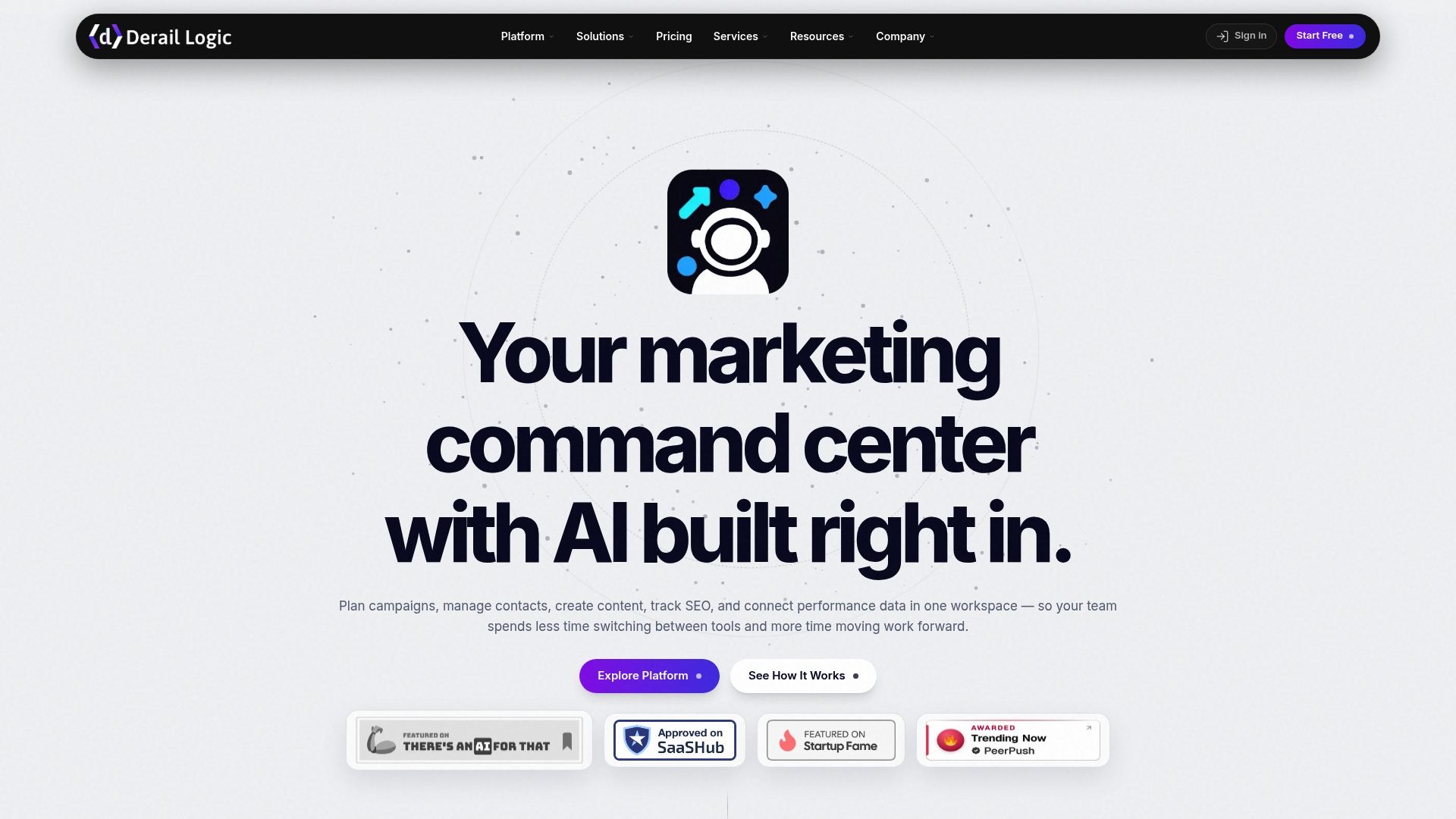
The marketing automation features inside MartechAI handle continuous campaign orchestration, audience segmentation, and performance monitoring without requiring manual intervention at every step. Teams get real-time analytics that surface what is working, and the visual campaign studio makes it easy to govern AI-driven workflows without losing creative control. If your team is navigating the shift from execution to oversight, MartechAI gives you the infrastructure to do it without losing output quality or campaign momentum.
FAQ
What percentage of marketing tasks can AI automate?
AI can automate between 65% and 75% of routine marketing tasks, with content and copywriting carrying the highest risk at 60% of tasks identified as automatable.
Can automation replace marketers entirely?
Automation replaces specific tasks, not entire marketing roles. Roles requiring strategic judgment, creative direction, and brand governance remain dependent on human expertise.
How many marketing jobs will AI eliminate?
Projections estimate a loss of 300,000 to 700,000 US marketing roles over the next 5–7 years, concentrated in junior and mid-tier execution positions.
What skills do marketers need to stay relevant?
AI fluency, strategic judgment, and the ability to govern automated systems are the most in-demand skills. Marketers who can evaluate and direct AI output hold the strongest position.
What is “compression from below” in marketing?
Compression from below describes the elimination of junior marketing roles through automation, which removes the entry-level positions that historically trained future senior leaders, creating a long-term talent pipeline risk.