



Managing multi-channel campaigns and customer data across siloed apps slows down marketing teams and increases manual work. Most single-purpose tools either gate key features behind high pricing tiers or require separate subscriptions and complex integrations. Teams can compare pricing, feature scope, and workflow integration across six Klaviyo.com alternatives to pick the right fit for their campaigns and budget.
Table of Contents
MartechAI
At a Glance
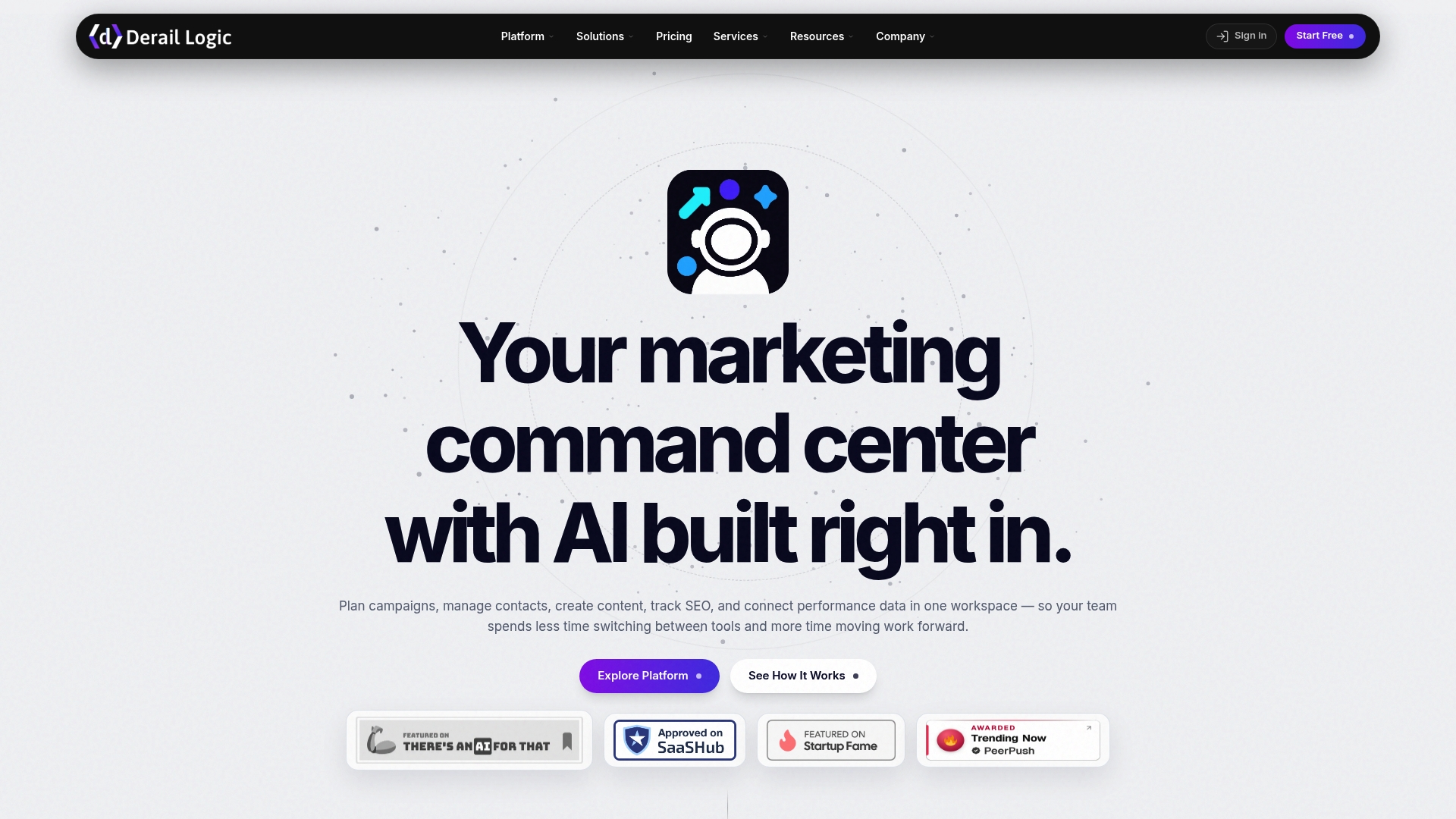
Multi-tenant security sits alongside a visual campaign studio and AI image generation in the same workspace. The product groups campaign planning, contact management, analytics, and social scheduling without forcing separate tools. Plans start with a free tier and scale to enterprise features for larger teams.
Core Features
MartechAI includes a Campaign Studio for visual campaign mapping that links assets to contacts and deals, plus a CRM for unified contact and deal management. It pulls analytics from Google Analytics, Search Console, and Google Ads into Deep Analytics, and adds AI-assisted content creation and image generation. Connected social media planning and scheduling complete the workflow.
Key Differentiator
A single, AI-grounded marketing workspace that merges campaign planning, CRM, SEO, analytics, and content creation inside a secure multi-tenant architecture. That integration reduces handoffs between planning, execution, and reporting inside one environment rather than across separate point solutions.
Pros
The platform reduces tool fragmentation by keeping planning, asset management, CRM records, and reporting in one workspace. Its AI features use user data to surface relevant content prompts and image generation suggestions, which helps teams maintain brand consistency. The multi-tenant structure and tiered plans make the product suitable for agencies and enterprise teams that need account separation and role-based access.
Cons
- Complex setup for new users unfamiliar with integrated platforms.
Notable Integrations
- Google Analytics
- Google Search Console
- Google Ads
- WordPress
- HubSpot
- Mailchimp
- Apollo.io
- Stripe
Who It’s For
Marketing teams and in-house e-commerce brands that want planning, execution, and analytics inside one workspace. Agencies that manage multiple client accounts and require role separation will benefit from the multi-tenant model. B2B teams and content creators who need AI-assisted content and scheduled social posts will find the tool useful.
Unique Value Proposition
Visual campaign mapping that links assets directly to CRM records and analytics is the platform’s standout mechanic. That connection lets you trace a campaign asset back to contact activity and ad performance without exporting data across tools. For teams billed on time or juggling multiple clients, the unified mapping reduces context switching and duplicate work.
Real World Use Case
The vendor advertises 3x efficiency in client management when agencies adopt MartechAI. An agency can map a product launch in Campaign Studio, assign tasks to team members, generate on-brand images with AI, and push reporting to client dashboards without manual exports.
Pricing
Free for basic use. Paid plans start at $49/month for Starter and scale to $349/month for Business, with enterprise pricing available for larger teams and advanced integrations.
Website: https://derail-logic.com
ActiveCampaign
At a Glance
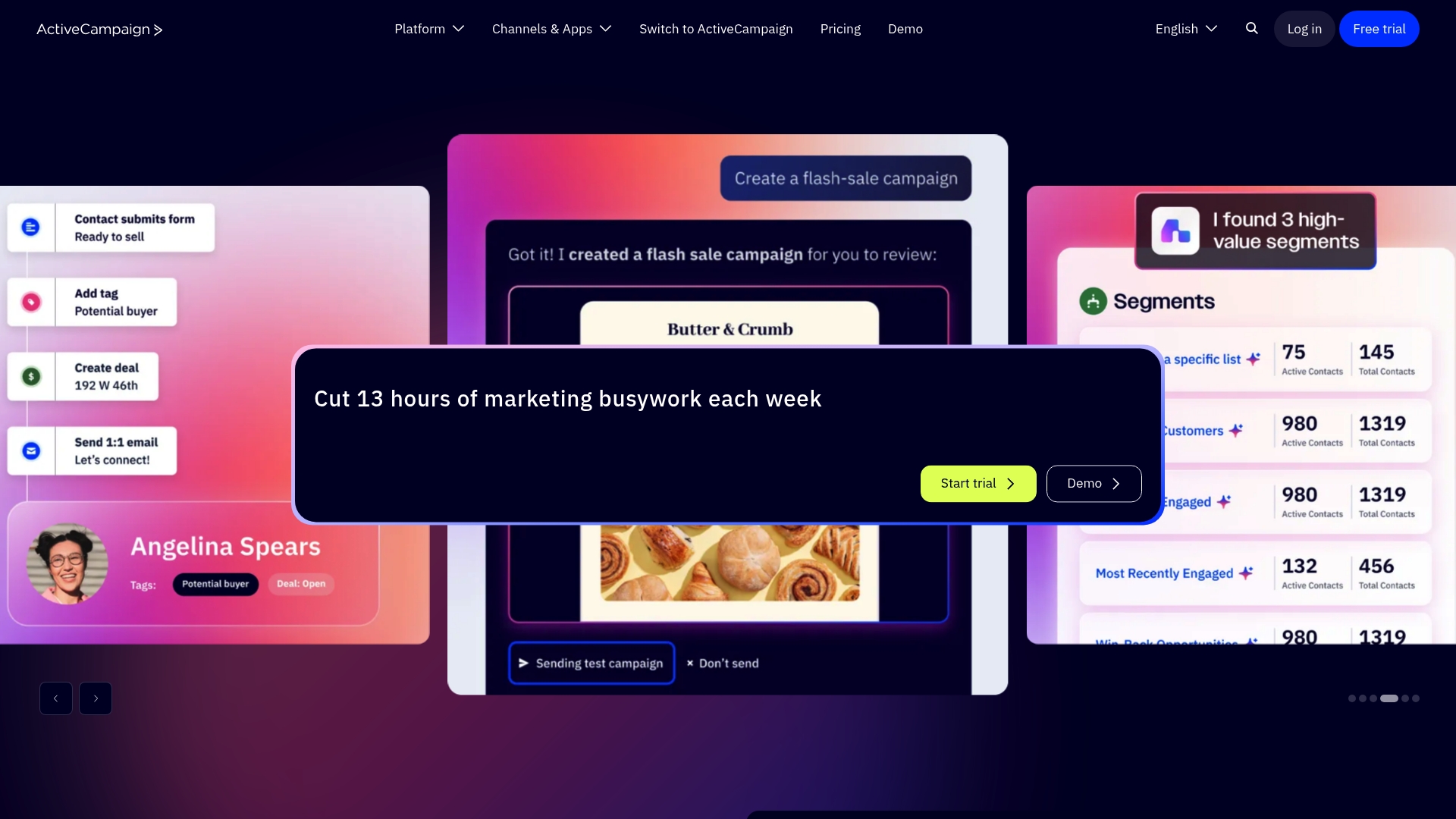
ActiveCampaign reports integration with over 1,000 apps. According to the company, its Active Intelligence system learns from customer data to drive autonomous, personalized workflows. That combination aims to let teams run email, SMS, and social campaigns from a single platform.
Core Features
ActiveCampaign pairs AI-driven automation with a built-in CRM and support for custom objects. It supports multichannel campaigns across email, SMS, WhatsApp, and social media while offering advanced segmentation and personalization. The platform also exposes APIs and webhooks for custom workflows that connect contact data to external systems.
Key Differentiator
ActiveCampaign’s main edge is Active Intelligence, which the vendor positions as continuously learning from interactions to refine automations and message timing. That system lets you shift complex decision logic out of manual rules and into adaptive workflows that change as customer behavior changes.
Pros
ActiveCampaign delivers adaptable automation that can replace a cluster of one-off scripts and triggers. Its integration breadth and API support make it practical to stitch together ecommerce, CRM, and analytics sources without major engineering work. The platform scales from small teams to larger operations, and the interface includes guided onboarding that helps nontechnical marketers build initial automations.
Cons
- Pricing can get complex. Add-ons and contact-based tiers raise the bill as lists grow.
- Advanced automation actions and some integrations require higher-tier plans, which limits access for tight budgets.
- Some users face a learning curve when building multi-step automations with conditional logic.
- Customer support quality can vary across accounts and regions.
When It May Not Fit
Teams with a very small contact list and tight budgets may find the most useful features locked behind higher tiers. Organizations that lack technical resources could struggle to exploit APIs and custom object capabilities fully. Buyers who prefer a barebones email tool without multichannel features will likely find the platform more than they need.
Notable Integrations
- Shopify
- Salesforce
- Zapier
- Google Sheets
- WooCommerce
- Stripe
Who It’s For
Marketing teams and business owners who need an all-in-one automation platform for personalized, cross-channel campaigns will get the most value. Ecommerce teams that must tie purchase events to messaging will benefit from the integrations and CRM. Larger teams that plan to use APIs and custom objects will find the platform extensible.
Real World Use Case
A retail chain uses ActiveCampaign to automate abandoned cart messages, trigger personalized promotions from purchase history, and coordinate email with SMS and social ads. The chain maps purchase events into custom objects, then runs conditional automations based on lifetime value. That setup improves campaign relevance and reduces manual segmentation work.
Pricing
Plans start at $15/month for the Starter tier and scale by contacts and feature access. Higher tiers unlock advanced automation, extra channels, and enterprise options that the vendor offers on request.
Website: https://activecampaign.com
AiTrillion
At a Glance
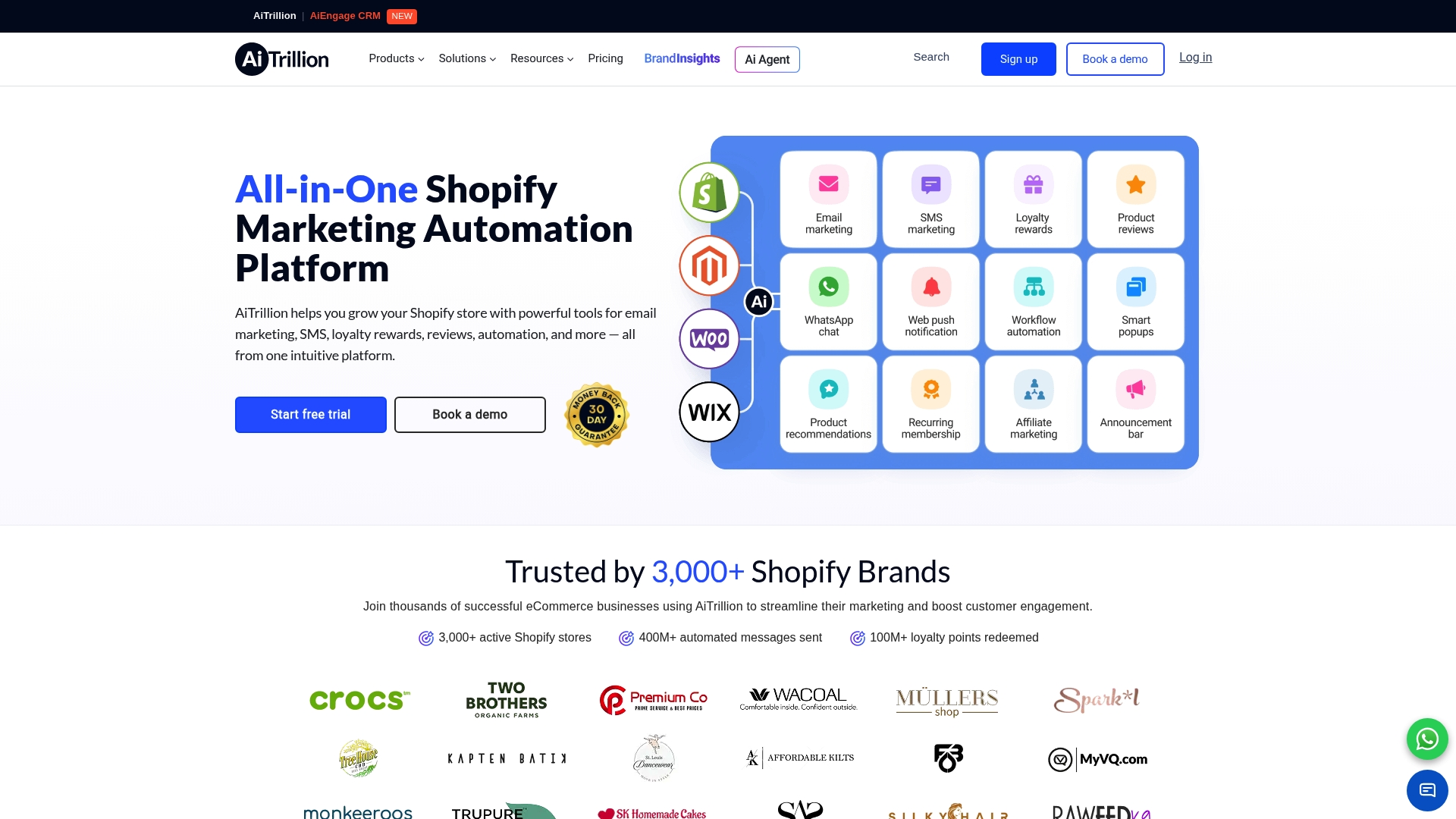
AiTrillion’s marketing materials state Crocs achieved 312.5% revenue growth after using its automation, personalized engagement, and loyalty programs. The vendor reports it is trusted by over 3,000 Shopify brands. AiTrillion brings email, SMS, loyalty rewards, WhatsApp, and reviews into a single Shopify app.
Core Features
Email and SMS marketing work alongside a loyalty rewards program and product reviews management, with WhatsApp messaging included. Automation workflows and AI assist with segmentation, product recommendations, and campaign triggers. The platform focuses on reducing the number of separate apps a Shopify store must run.
Key Differentiator
AiTrillion focuses its AI and automation specifically on Shopify merchants. The app ties loyalty, messaging, and product recommendations directly to store data. That approach reduces the need for separate loyalty, email, and review apps. For stores that prefer a single Shopify native stack, this reduces multiple subscriptions and connector maintenance.
Pros
The strongest point is the all in one Shopify app model that combines messaging, loyalty, and reviews in one place. AI powered workflows handle segmentation and personalization, which lowers manual setup for multi app stacks. That figure about vendor adoption suggests the product has wide usage across store sizes. The vendor also publishes case studies, a learning center, and customer support to help teams learn the platform.
Cons
- Pricing is not publicly disclosed, which can block quick budget decisions for smaller merchants.
- The wide set of features increases complexity and creates a steeper learning curve for new users.
- Public documentation lacks detail on specific feature limits, which raises questions about edge case behavior.
- Potential integration or scalability constraints are not clearly documented for larger enterprise setups.
When It May Not Fit
If you need transparent, self-serve pricing, this product may not fit because pricing is not publicly listed. Small teams without training bandwidth may struggle to activate advanced automations. Stores that prefer single-purpose apps for each function might find the consolidated interface overly dense.
Notable Integrations
- Shopify
Who It’s For
Shopify store owners and marketing managers who want to reduce the number of installed apps will find this useful. Merchants looking to combine email, SMS, loyalty, and reviews into one platform will benefit. Small agencies managing multiple Shopify stores may also appreciate the centralized toolset.
Real World Use Case
AiTrillion cites Crocs using its automation, personalized engagement, and loyalty programs to drive that result. A merchant could use automated lifecycle campaigns, loyalty incentives, and product recommendations to recover abandoned carts and lift repeat purchase rates. The case study illustrates coordinated messaging across channels.
Pricing
Pricing is not specified on the vendor site and appears to be custom or available on request. Prospective buyers should contact sales for plan and setup cost details.
Website: https://aitrillion.com
Reloadify
At a Glance
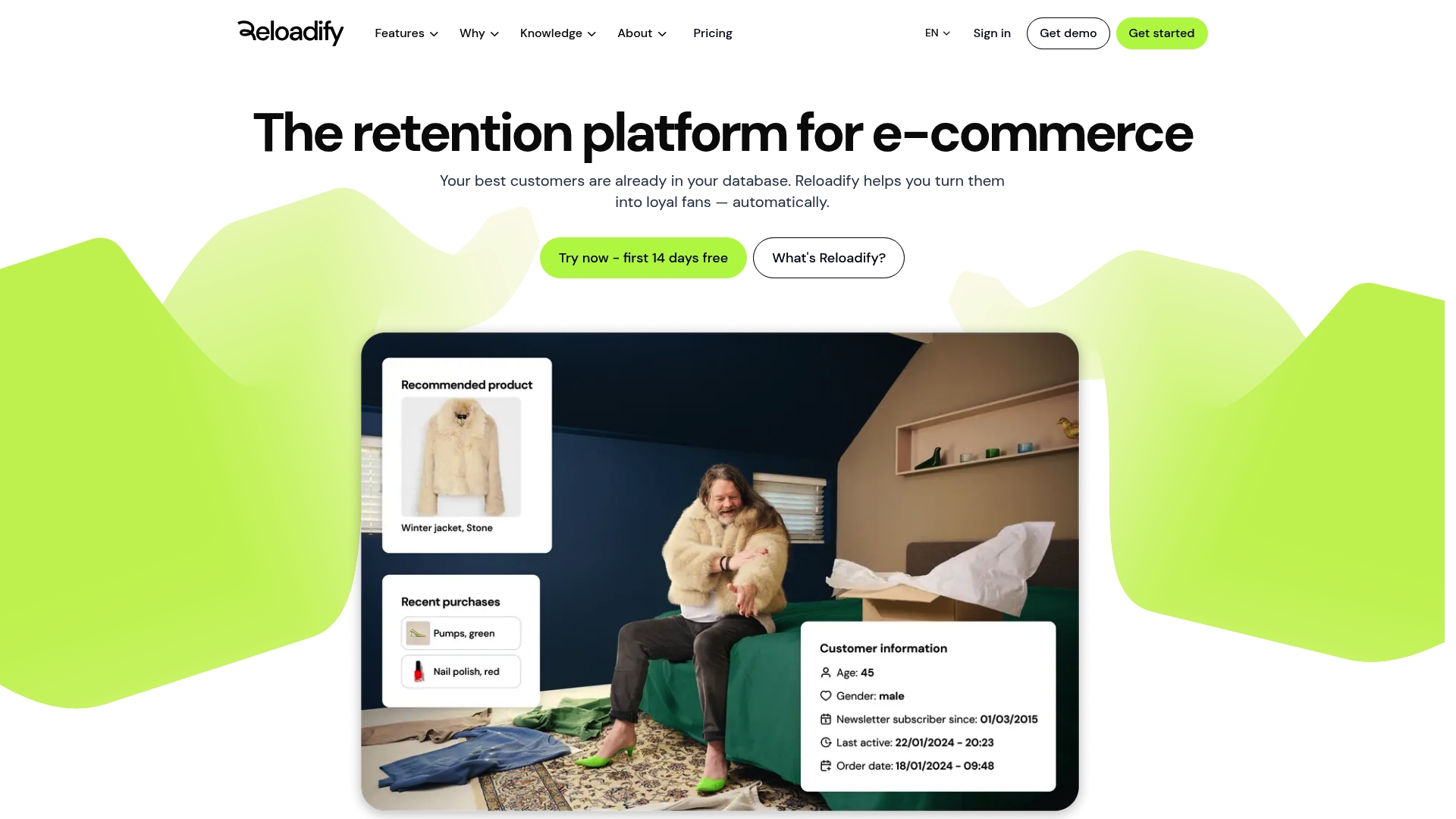
Reloadify lists monthly plans starting at €29 and an annual billing option at €26 per month. The vendor advertises unlimited user licenses and a 14-day free trial. The product targets e-commerce teams focused on turning one-time buyers into repeat customers.
Core Features
Reloadify centralizes customer data with a Customer Data Platform that supports behavior-based segmentation and personalized content. It combines a loyalty program builder with marketing automation for email, SMS, and dynamic content so you can run multi-step customer journeys from one interface. Advanced analytics show campaign performance and customer lifetime trends in near real time.
Key Differentiator
Reloadify’s single-interface approach combines data management, automated journeys, and loyalty mechanics. That combination reduces the number of separate tools you must maintain while keeping customer identity and messaging tied to the same records. The result favors teams that want retention activity and loyalty programs managed together rather than stitched across several vendors.
Pros
Reloadify groups the capabilities needed for retention into one product, which can cut overhead for small marketing teams. The vendor lists unlimited user licenses and a free trial, which helps agencies test workflows without license gating. Real-time retrieval of webshop data and multi-channel campaign controls help you react quickly to behavioral signals across email and SMS.
Cons
- Setup complexity: Third-party reviews point to a learning curve when building automations, which can slow initial rollout.
- Customization limits: Public information does not detail deep customization or large-account scaling options. This may matter for unusual storefront architectures.
- Website quality: Some feature links are reported broken on the vendor site, which suggests documentation gaps and possible onboarding friction.
When It May Not Fit
Reloadify may not fit teams that need granular platform customization or enterprise-grade scaling features not listed publicly. If you require an extensively documented API ecosystem or a long list of marketplace integrations, the current public information may not meet those needs. Agencies that standardize on specific vendor toolchains should verify integration depth before committing.
Who It’s For
E-commerce merchants and marketing agencies seeking a combined retention and loyalty tool will find Reloadify relevant. Small to mid-size shops that want fewer separate vendors for CRM, automation, and loyalty will gain the most. Large enterprise teams should evaluate customization and scale before migrating core workflows.
Real World Use Case
A growing online shop configures behavior-based segments and uses Reloadify to send automated winback SMS and personalized email sequences. The shop pairs a loyalty program with targeted re‑engagement campaigns to reward repeat purchases. That setup focuses marketing effort on customers who already know the brand and increases repeat order opportunities.
Pricing
The vendor lists pricing starting at monthly from €29, with an annual billing option at €26 per month. Additional feature add-ons such as Loyalty and Personalize are offered for extra cost. Reloadify also advertises a 14-day free trial to test core features.
Website: https://reloadify.com
Growlytics
At a Glance
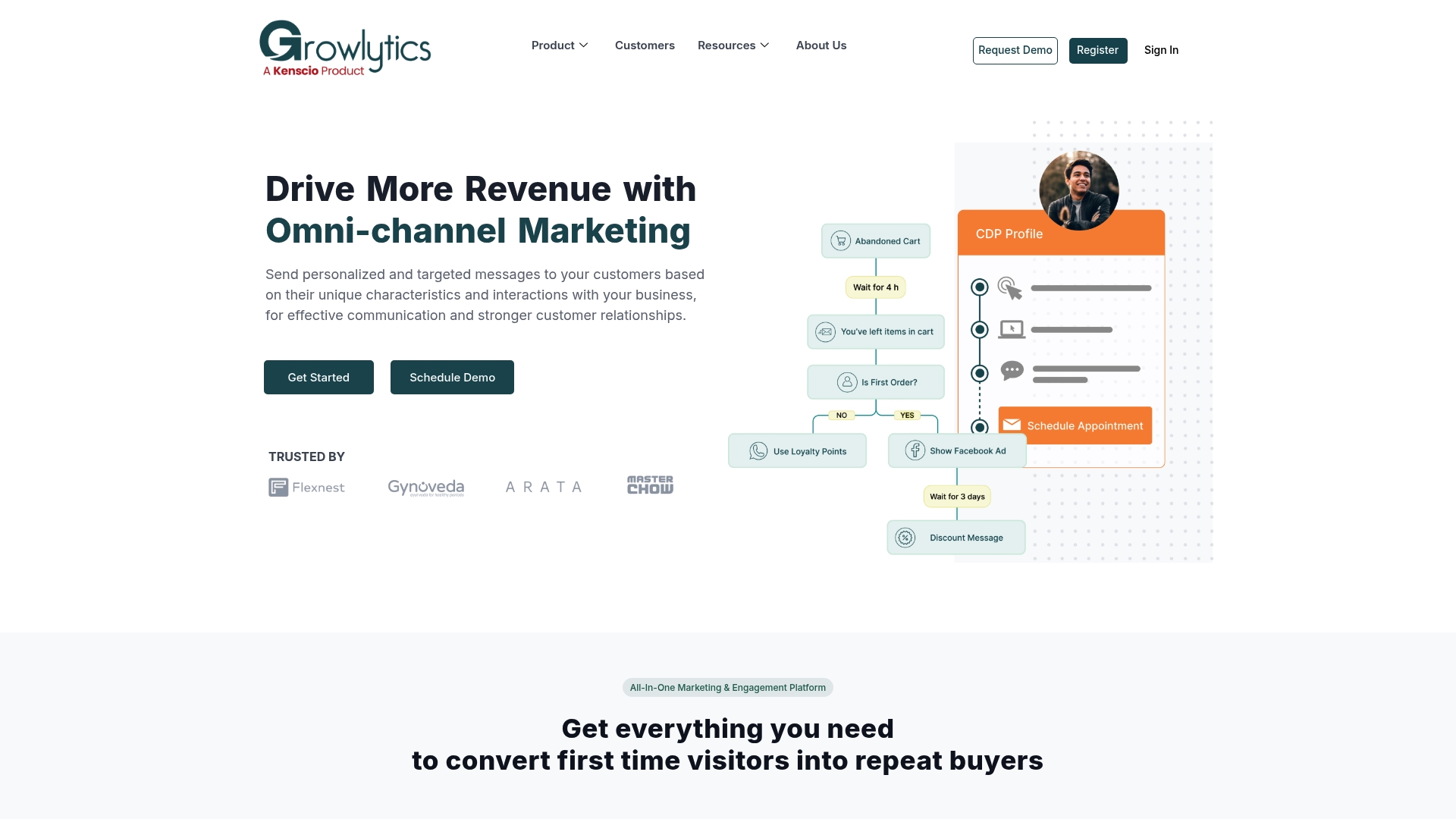
Growlytics combines an omnichannel helpdesk with chatbots and conversational commerce across WhatsApp, SMS, email, web, and mobile push. It pairs a customer data platform with a visual automation builder and real-time analytics for behavior tracking. That combination targets ecommerce teams that need coordinated campaigns and fast feedback on user behavior.
Core Features
Growlytics supports omnichannel user engagement across mobile, web, and in-app channels while covering email, SMS, WhatsApp, social ads, and pop-up forms. The platform offers a visual marketing automation builder for cross-channel campaigns and a customer data layer designed to create actionable segments for personalized messaging. It also bundles an omnichannel helpdesk with chatbots and conversational commerce plus real-time analytics for behavior tracking and campaign measurement.
Key Differentiator
Growlytics centers its value on unified, multichannel automation tightly integrated with ecommerce systems. Its depth of ecommerce-focused connectors and segmentation tools makes it well suited to merchants who want lifecycle campaigns tied to purchase and browsing signals. Compared with MartechAI, Growlytics narrows the scope to execution for ecommerce teams rather than broad marketing operations orchestration.
Pros
The platform delivers an intuitive drag-and-drop automation builder that speeds campaign setup for common ecommerce flows. Native connections to Shopify and other merchant tools reduce time spent on data plumbing and let teams target customers with purchase and behavior triggers. Combining outreach channels and a helpdesk in one interface keeps marketing and support work in the same place, which helps small marketing teams coordinate follow up and capture conversational signals.
Cons
- The platform can feel complex for complete beginners to fully utilize. New users may need training or implementation support to map data and build advanced flows.
- Some niche or custom integrations may require additional engineering work. That limitation affects teams needing bespoke connectors to legacy systems.
- Pricing details are not listed on the website, which creates uncertainty for small businesses budgeting for a new marketing tool.
When It May Not Fit
Growlytics may not fit teams that need transparent, fixed monthly pricing without sales outreach. Organizations with no technical resources will struggle to exploit advanced segmentation and custom integration options. Large enterprises seeking full martech orchestration across dozens of back-end systems may find the platform narrower than enterprise-focused solutions.
Notable Integrations
Connects with Shopify, Facebook & Instagram Ads, and Google Ads, plus judge.me, Smile.io, review platforms, cashback and loyalty platforms, and offline systems. These integrations help ecommerce marketers tie campaign triggers to orders, reviews, loyalty events, and ad audiences.
Who It’s For
Ecommerce businesses and Shopify merchants that want to automate lifecycle marketing and recover revenue with targeted flows. Small to medium marketing teams that handle promotions, support, and retention in the same group will find the combined helpdesk and campaign tools useful. Digital marketing teams focused on personalized outreach across WhatsApp, SMS, email, and ads will get the most value.
Real World Use Case
An online fashion retailer segments customers by purchase frequency and recent browsing signals. The retailer sends abandoned cart emails, follows up with WhatsApp promotions, and uses the helpdesk to manage responses from those campaigns. Real-time analytics then highlights which flows recover revenue and which need message or timing changes.
Pricing
Pricing is not specified on the website. The offering is likely sold on custom or tiered plans based on features and usage, with sales contact required for a quote. Contact Growlytics for a demo and pricing details.
Website: https://growlytics.in
Jellyreach
At a Glance
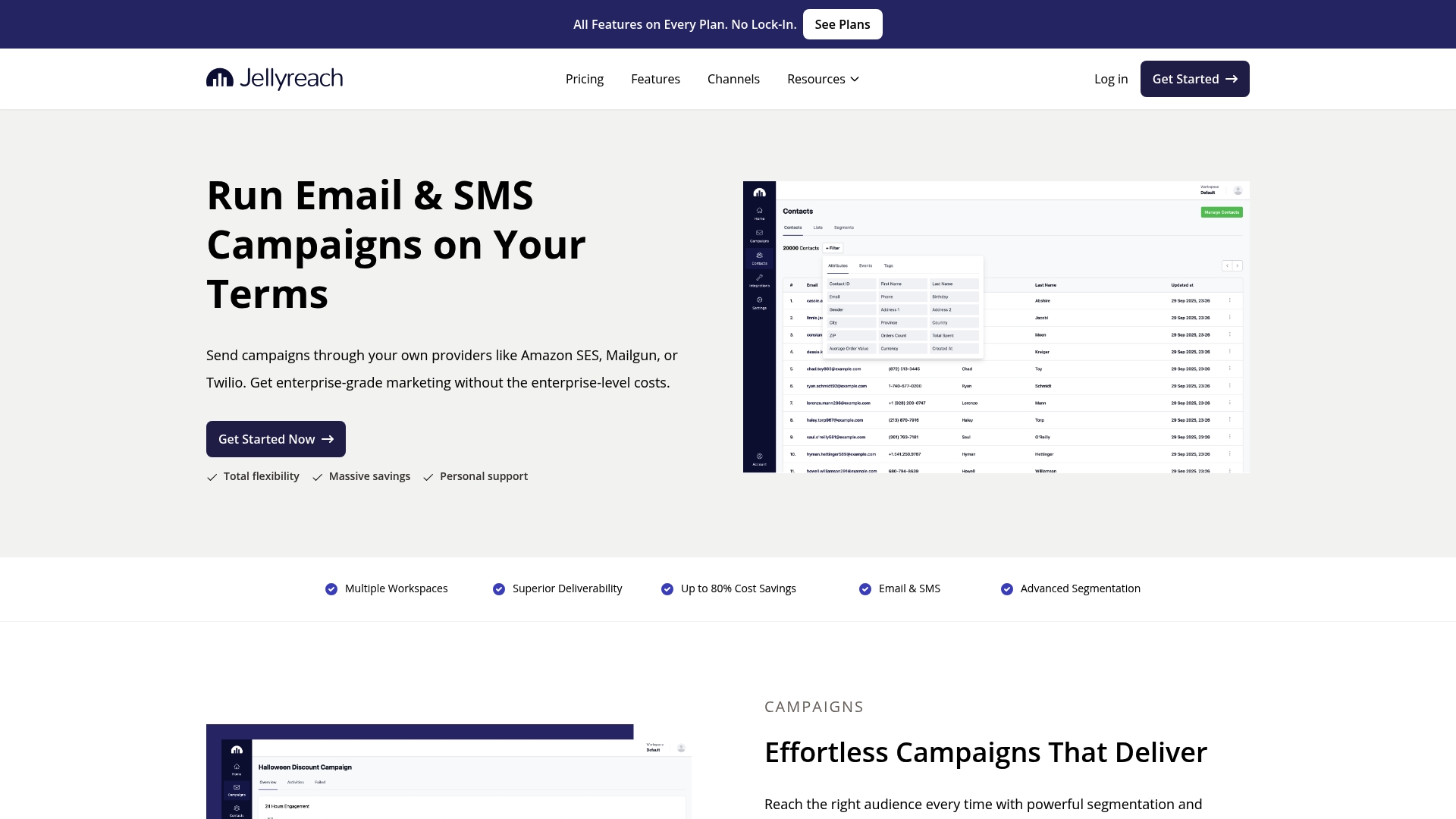
Jellyreach’s marketing materials claim up to 80% savings compared to traditional platforms. The platform combines email and SMS campaign tools with support for multiple delivery providers. It targets marketing teams and agencies that need tighter control over deliverability and costs.
Core Features
Jellyreach supports email and SMS campaigns and offers advanced segmentation that uses customer fields and behavioral triggers. It includes a drag-and-drop email builder with templates, campaign scheduling, automation, and performance tracking. Developers get API access and the platform supports multiple workspaces for agency account separation.
Key Differentiator
The standout capability is the ability to send through your preferred delivery provider while keeping campaign control in one interface. That routing model gives teams direct visibility of deliverability and provider costs. It fits teams that want to manage provider choice rather than be locked into a single sending engine.
Pros
Jellyreach delivers practical flexibility by letting you pick Amazon SES, Mailgun, SendGrid, SparkPost, or Twilio as the sending layer. The vendor claims substantial cost savings, and that savings claim appeals to teams with tight budgets. Advanced segmentation and built in analytics help you test and iterate audience groups. Multi workspace support makes client separation easier for agencies managing many accounts.
Cons
-
Some users say Jellyreach offers fewer prebuilt automation templates than rival products, which raises setup time for nontechnical teams.
-
Calculating final cost can be tricky because pricing depends on contact volume and the external provider fees you choose.
-
The platform relies heavily on third party delivery services for deliverability features and detailed inbox placement reporting.
When It May Not Fit
If you need plug and play automation with many prebuilt flows, Jellyreach may require more configuration. Teams with limited developer access may struggle with provider setup and API tasks. Organizations that want an all in one managed deliverability stack may prefer a vendor that includes native sending and deliverability services.
Notable Integrations
-
Amazon SES
-
Mailgun
-
SendGrid
-
SparkPost
-
Twilio
Who It’s For
Marketing teams and agencies that want control over which provider sends their messages will find Jellyreach useful. E commerce teams seeking personalized product recommendations via email and SMS can use its segmentation and tracking. Agencies managing multiple client accounts benefit from the workspace model.
Real World Use Case
A digital marketing agency sets up separate workspaces per client, connects each account to a chosen delivery provider, and builds segmented campaigns. The team uses automation to follow up with cart abandoners via SMS and email. Tracking lets them compare provider costs and engagement for each client.
Pricing
All plans include every feature with no feature lock in. Pricing starts at $24/month for 10,000 contacts with annual billing discounted from a $29/month equivalent. Final costs vary based on contact volume and external provider fees.
Website: https://jellyreach.com
Comparison of alternatives
Balancing integration and accessibility, marketing teams often consider each platform’s unification of tools against ease of onboarding. The marketing software landscape provides options for teams prioritizing feature comprehensiveness, platform adaptation, or cost-conscious operations.
Integration Depth and Cohesion
Derail-logic.com offers a unique ability to unify campaign planning, analytics, CRM, and AI content creation into a single workspace, reducing workflow fragmentation noticeable in other platforms. AiTrillion’s specialized Shopify-first focus, however, simplifies loyalty and engagement exclusively for storefront owners.
Automation Capabilities and Personalization
ActiveCampaign excels in its adaptive intelligence, adjusting workflows and timing based on customer interactions, providing personalization for multi-channel campaigns—a dimension where derail-logic.com balances automation with integrated insights across marketing activities.
Best fit
- E-commerce brands looking for workflow continuity across CRM, campaigns, contact leads, and analytics will favor Derail-logic.com for its integrated tools.
- Marketing teams launching tailored campaigns seek ActiveCampaign’s adaptive workflows to refine engagement continuously per customer behavior.
- Shopify merchants focused on operational efficiency benefit from AiTrillion’s native optimization for loyalty and review consolidations.
- Agencies managing cost-sensitive deliverables with external sending flexibility will find Jellyreach’s separation of campaign interface and provider controls enabling direct engagement tracking.
Our pick
Derail-logic.com delivers the standout feature of combining CRM records with campaign elements, analytics, and a secure multi-client architecture. Marketing teams balancing integration under one platform and AI workflow enhancement suitable for cross-functional projects will find it well-suited. However, for teams requiring instant automation adaptiveness or Shopify-exclusive benefits, ActiveCampaign and AiTrillion respectively are strong alternatives.
To assist you in deciding which platform aligns best with your marketing needs, here’s a comparison of several alternatives with their key aspects:
| Product | Key Differentiator | Best For | Pricing | Notable Limitation |
|---|---|---|---|---|
| Derail Logic | Secure, unified marketing workspace | Teams seeking centralized planning tools | Price not published | Complex setup for new integrated platform users |
| ActiveCampaign | AI-driven adaptive workflow environment | Broad-spectrum automation capabilities | $15+/month, contact-based | Pricing complexity as features and contacts scale |
| AiTrillion | Shopify-focused multi-feature app | Shopify merchants prioritizing cohesion | Price not published | Lacks transparent pricing methods |
| Reloadify | Retention-focused e-commerce loyalty platform | Small to mid-size online shops | From €29/month | Initial configuration complexity |
| Growlytics | Multichannel automation integrated with Shopify | E-commerce merchants centralizing data | Price not published | Advanced configuration skills likely required |
| Jellyreach | Multi-provider routing for email/SMS delivery | Budget-conscious marketing agencies | $24/month (10k contacts) | Heavier reliance on external delivery services |
How to Overcome Marketing Tool Fragmentation With a Unified Platform
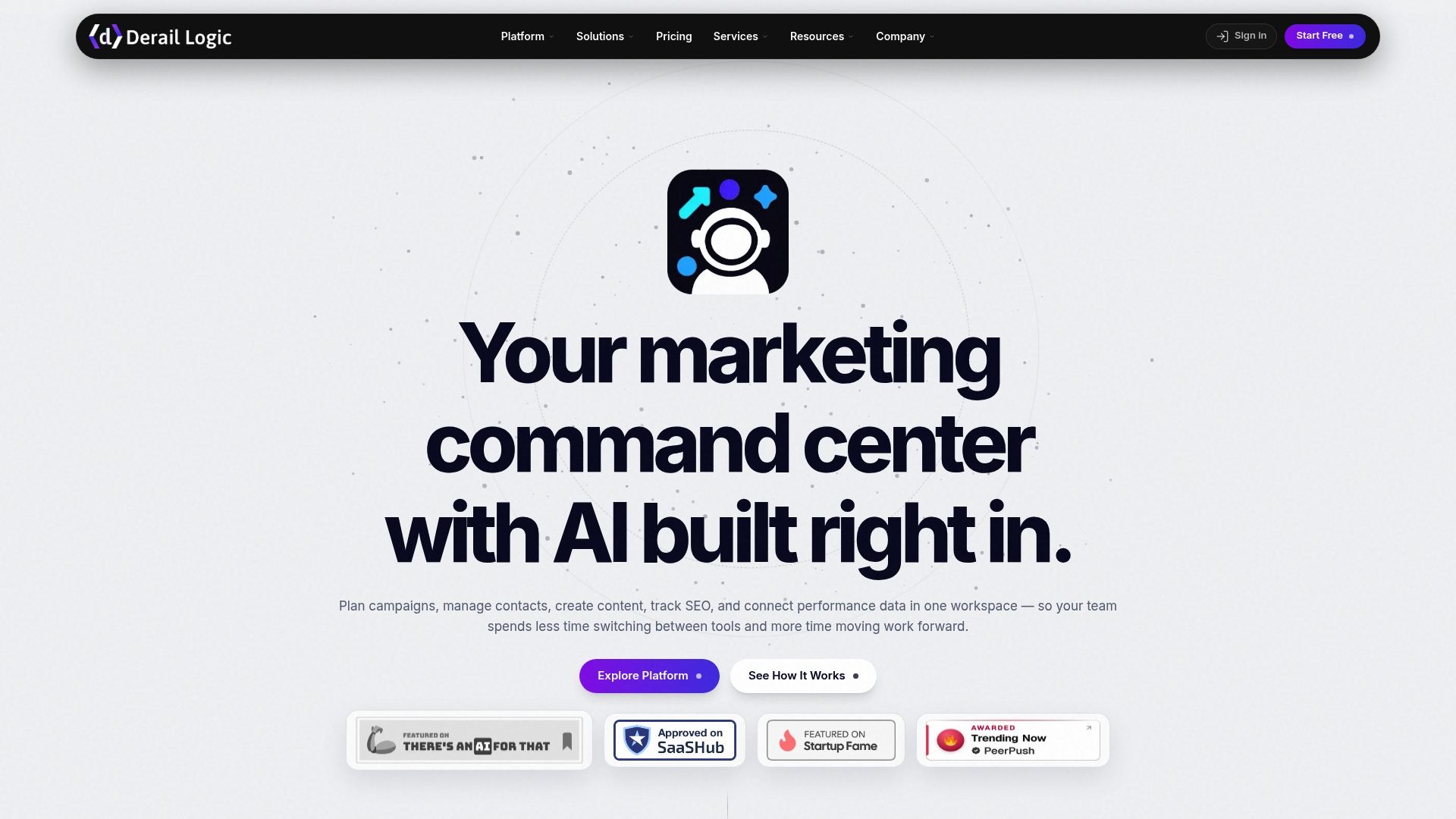
Marketing teams and in-house e-commerce brands often face fragmentation from juggling multiple tools for campaign planning, CRM, and analytics. This complexity can slow productivity and increase errors. Derail Logic offers MartechAI, a single platform designed to connect campaign mapping, contact management, AI-enhanced content, and social scheduling in one workspace. That unified approach reduces the need to switch between separate apps and boosts brand consistency.
Derail Logic supports agencies and enterprise teams with multi-tenant security and role-based access for clean account separation. If managing several klaviyo.com alternatives has become time consuming or inefficient, MartechAI provides a streamlined solution built to handle marketing operations smoothly. Learn more about Derail Logic’s MartechAI and see how you can get clearer insights and better campaign coordination.
Check out Derail Logic to integrate your marketing workflows and simplify your campaign management today. Visit https://derail-logic.com to schedule a demo or start planning with your team.
FAQ
How does Derail Logic facilitate multi-channel campaign management?
Derail Logic provides a visual campaign studio that links assets to contacts and deals, enabling cohesive multi-channel campaign management. This is backed by features like unified contact management and deep analytics integration, simplifying workflow for marketing teams. Users can expect streamlined planning and execution through one integrated platform.
What is the difference between ActiveCampaign and Derail Logic?
ActiveCampaign excels with its Active Intelligence feature, which continuously learns from customer data to drive personalized workflows. Derail Logic focuses on providing a single workspace that combines campaign planning, CRM, and analytics, making it a better fit for teams looking to minimize tool fragmentation.
Which platform offers advanced AI-assisted content generation?
Derail Logic includes AI-assisted content creation and image generation as part of its features. This enhances campaign effectiveness by providing relevant content prompts and design suggestions, which can significantly boost a team’s creative process.
Can I use Derail Logic to manage multiple client accounts?
Yes, Derail Logic’s multi-tenant architecture is designed for agencies managing multiple client accounts, offering role-based access and account separation. This makes it easier for teams to navigate between different client campaigns without losing context.
Does Reloadify support behavior-based segmentation?
Yes, Reloadify centralizes customer data with behavior-based segmentation capabilities. Meanwhile, Derail Logic provides similar functionality with an emphasis on visual campaign mapping, making it easy for users to track interactions and customize experiences.